
360g vs. 280g: Choosing the Right Custom Casual Apparel Fabric Weight
360g vs. 280g: Choosing the Right Custom Casual Apparel Fabric Weight
In custom casual apparel sourcing, 360g and 280g are not two quality tiers of the same garment. They are two different jobs. A 360g hoodie is built to be worn on its own, holding its own shape while carrying the visual weight of an outfit. A 280g high-elastic long sleeve shirt is built to move with the body and to sit quietly under another layer. The decision facing a brand buyer is therefore not which weight is better, but which weight belongs in which slot of the range, in which season, and at which specification.
This comparison uses the two platforms that Lihongwear — the export brand of Guangzhou Lihong Apparel Trade Co., Ltd., a Guangzhou-based menswear OEM/ODM manufacturer operating a 5,000 m2 factory — actually produces: the 1901 Series 360g hoodie in Mountain Cotton, and the 1801 and 1701 Series 280g high-elastic long sleeve shirt in a four-way stretch tech blend. Both fabric families have been tested by Centre Testing International Group Co., Ltd. (CTI Tianjin) against GB 18401-2010 Category B. What separates them is weight, fiber composition, stretch behaviour, size range, and the wearing layer each one is engineered for.
The short answer for buyers working against a launch calendar: choose 360g when the garment must stand alone as a spring and autumn outer layer, when it needs to hold a structured drape, and when the size run has to carry plus sizes. Choose 280g high-elastic when the garment is a winter inner layer, a movement garment for active use, or a long-sleeve style that has to stretch over the head and shoulders without distorting. Many brands end up ordering both, because the two weights solve different problems rather than competing for the same one.
The two platforms at a glance
- 360g platform — 1901 Series hoodies in Mountain Cotton: 63.5% cotton, 36.5% polyester, with a 100% polyester lining. Sizes M–3XL.
- 280g platform — 1801 and 1701 Series high-elastic long sleeve shirts in High-Elastic Tech Blend: 79.7% polyester, 20.3% spandex, four-way stretch. Sizes M–4XL.
- Alternative 280g option — 18 Series High-Elastic Smooth Polyester, a 100% polyester thin sweatshirt construction.
- Textile safety — CTI Textile Safety Test Reports issued against GB 18401-2010 Category B.
- Custom MOQ — from 200 pieces per style; spot goods carry no minimum order and support mixed wholesale.
- Lead time — spot goods ship within 3 days; custom orders run 15–25 days from sample confirmation to bulk delivery.
- Decoration — screen printing, DTG (digital direct injection), embroidery, and heat transfer logo.
Why Fabric Weight Is the Most Misread Number in Custom Casual Apparel
Fabric weight is a density specification, not a quality score. A 280g four-way stretch tech blend and a 360g composite knit are not ranked against each other; they are assigned to different wearing layers. Buyers who read grams as a ranking usually make one of four predictable mistakes, and each of them surfaces after production rather than before.
- Weight confused with quality. A heavier knit does not automatically outperform a lighter one, and a lighter one does not automatically feel cheaper. The 280g High-Elastic Tech Blend is 79.7% polyester and 20.3% spandex — a technical construction chosen for stretch, not a downgrade of the 360g Mountain Cotton hoodie fabric.
- Weight confused with season alone. The relevant question is the wearing layer. A 360g hoodie in spring and autumn is a standalone outer piece; the same 360g garment worn as a winter inner layer creates heat build-up that a 280g high-elastic long sleeve avoids.
- Weight confused with fit. The 360g hoodie is specified in sizes M–3XL, while the 280g high-elastic long sleeve is specified in M–4XL. A brand assembling a single size chart across both platforms has to reconcile that gap before the purchase order is signed, not after stock lands.
- Weight decided after decoration. Screen printing, DTG, embroidery and heat transfer logo are all available across the Lihongwear range, so the fabric weight should be locked first and the decoration method selected against it — not the other way round.
There is also a commercial consequence that rarely appears in fabric discussions: weight changes the packed volume of a shipment. A range built entirely from 360g pieces ships and stores differently from a mixed range that carries a 280g inner layer. For wholesalers holding stock across multiple seasons, that difference matters more than any single spec sheet line.
Where 360g and 280g Sit in the Custom Casual Apparel Market
The broader category is expanding, and it is expanding in both directions at once. According to Fortune Business Insights, the global casual wear market was valued at USD 645.22 billion in 2025 and is projected to grow to USD 906.32 billion by 2034. Proficient Market Insights estimates the custom made clothes market will reach USD 213.1 billion by 2035, with a CAGR of 10.5% from 2026. Growth of that scale is not driven by a single fabric weight — it is driven by brands building fuller ranges that cover more wearing occasions.
At the heavy end, the 350–420 GSM band has become the baseline standard for premium streetwear, providing the structured, boxy drape that luxury loungewear brands prefer, according to PrintDoors / Accio Work. A 360g hoodie sits inside that band, which is why the weight has become a default reference point for brands entering the oversized and street style casual segments.
At the lighter end, the stretch layer serves a different demand: garments that move. The 280g high-elastic long sleeve addresses layering, active use, and the long-sleeve casual tops that brands sell as part of a seasonal system rather than as a single hero piece. Together, the two weights describe a range rather than a preference, which is exactly how they should be planned.
The Two Platforms Compared: Mountain Cotton 360g vs. High-Elastic 280g
The 360g platform — 1901 Series hoodie in Mountain Cotton
The 1901 Series hoodie is built on Mountain Cotton, a composite knit specified as 63.5% cotton and 36.5% polyester with a 100% polyester lining. The size range is M–3XL. Its natural role in a range is the standalone spring and autumn layer: the piece a customer puts on as the outermost garment rather than underneath something else. Buyers planning oversized or street style casual apparel generally treat this weight class as their anchor product, because the drape holds the silhouette that those segments are built around.
One clarification matters for buyers who also source t-shirts and pants from the same supplier. The wider Men's Basic Apparel programme spans XS–5XL, but the 360g hoodie itself is specified in M–3XL. Brands that need extended sizes in a heavyweight hoodie should confirm availability before the order is placed rather than assume the programme size chart applies to every style.
The 280g platform — 1801 and 1701 Series high-elastic long sleeve
The 1801 and 1701 Series long sleeve shirts use High-Elastic Tech Blend, specified as 79.7% polyester and 20.3% spandex with four-way stretch. The size range is M–4XL. This construction is designed for movement and for layering: as a winter inner layer beneath a heavier outer piece, and as an active or athleisure garment where the fabric has to follow the shoulder and elbow rather than resist them. The four-way stretch is the defining technical difference between the two platforms, and it is the specification that should decide the slot when a brand is choosing between them.
A third option sits alongside them: the 18 Series High-Elastic Smooth Polyester, a 280g, 100% polyester thin sweatshirt. Buyers who want the lighter 280g weight but a smooth single-fiber surface rather than a stretch blend can source within the same 280g family rather than leaving the weight class entirely.
Certification: read the scope line, not just the report number
Both fabric families are supported by CTI Textile Safety Test Reports issued by Centre Testing International Group Co., Ltd. (CTI Tianjin). The testing standard is GB 18401-2010 Category B, which covers fiber composition, color fastness, formaldehyde, and decomposable aromatic amine dyes. Three reports are relevant to a buyer comparing these two weights:
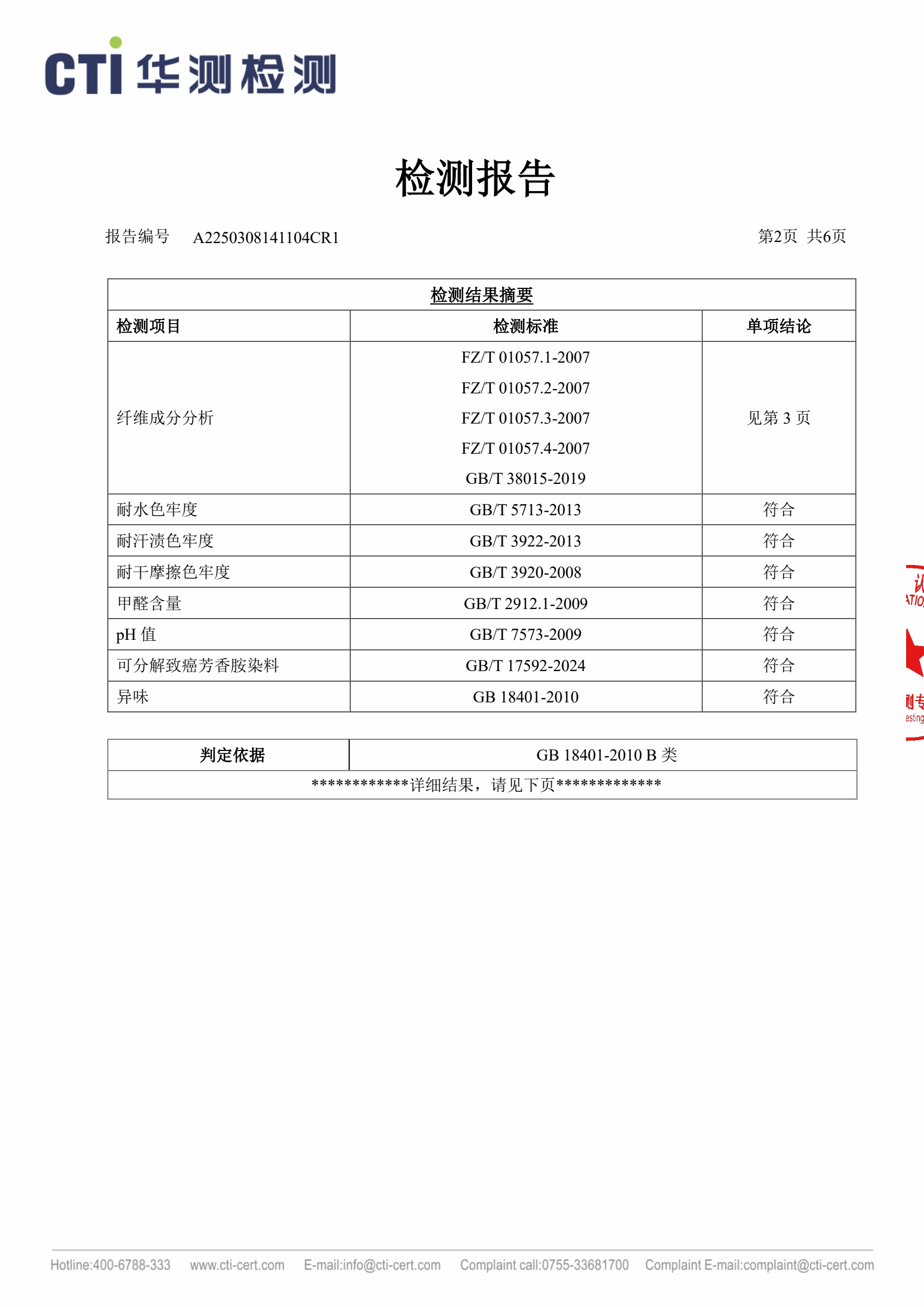
- A2250308141104CR1 — issued 2025-05-29, covering the full range of men's hoodies, long-sleeve shirts, T-shirts and other garment fabrics.
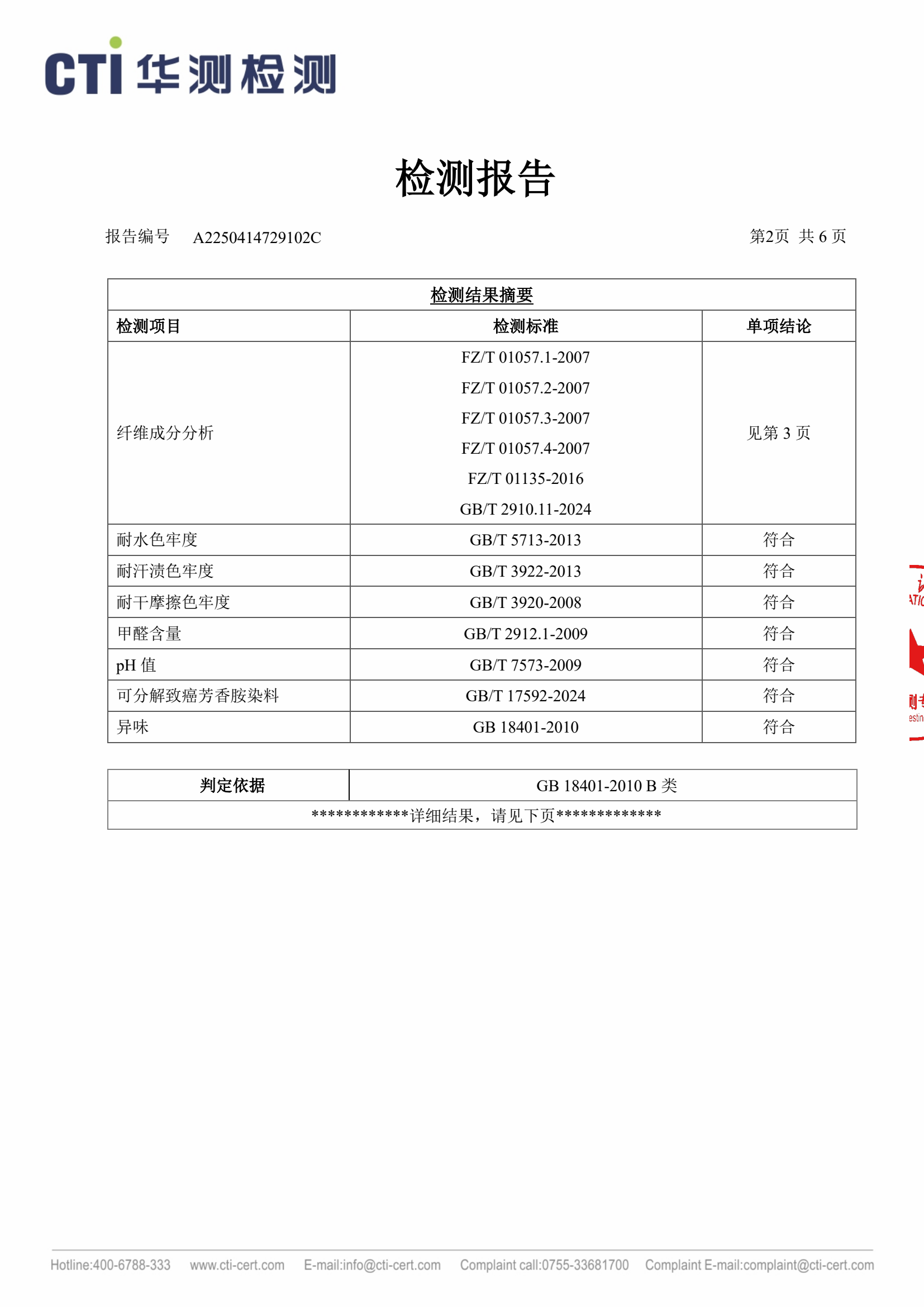
- A2250414729102C — issued 2025-06-18, covering Mountain Cotton Composite Fabric, the hoodie fabric specified as 63.5% cotton plus 36.5% polyester.
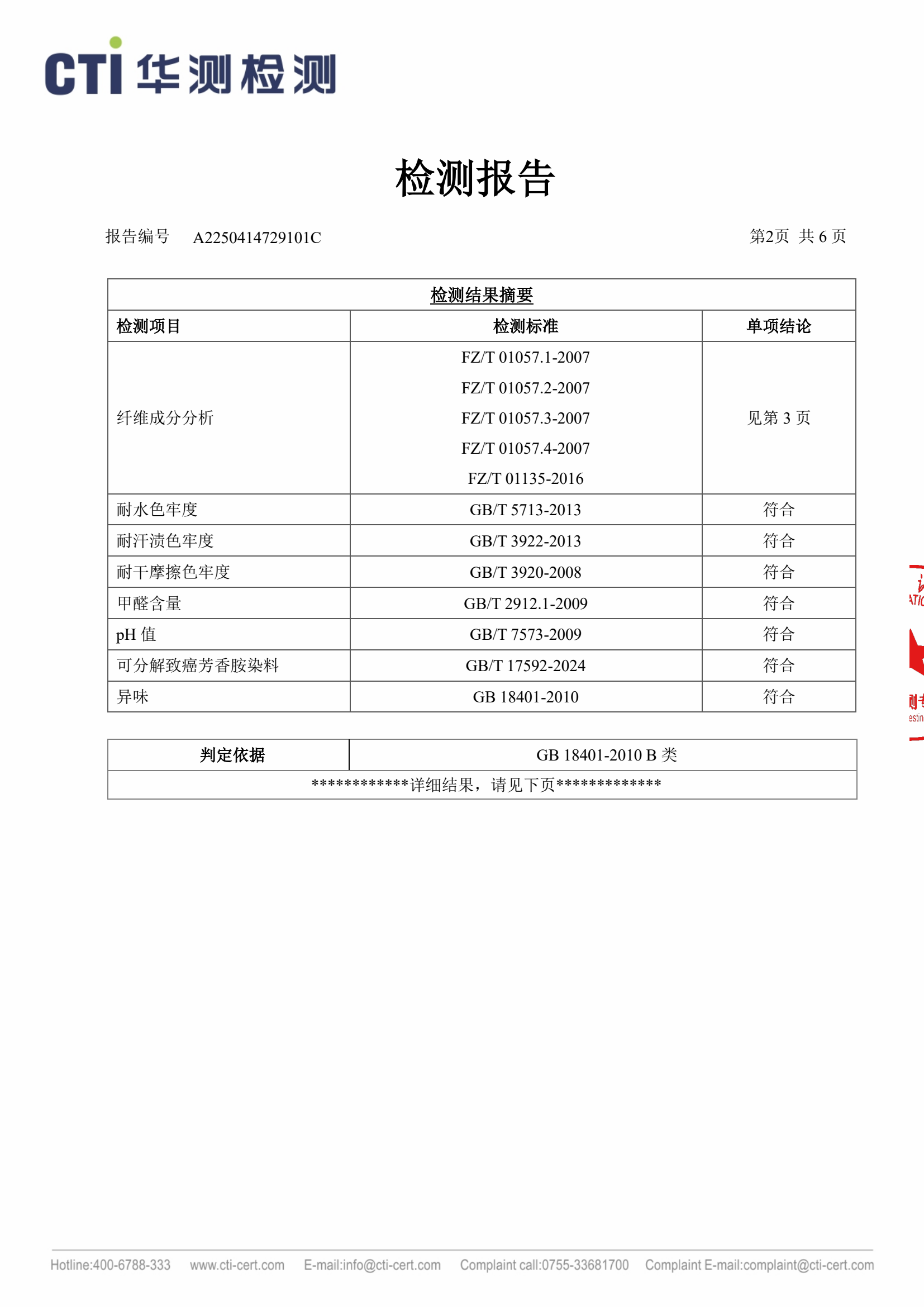
- A2250414729101C — issued 2025-06-18, covering high-elastic fabric, a 100% polyester fiber navy knitted fabric.
The practical point for sourcing teams is scope. A full-range report and a fabric-specific report are not interchangeable for every compliance file. If a buyer's market requires documentation tied to the exact fabric being ordered, the report scope line should be matched to that fabric rather than assumed from a general category report. This is one of the checks worth completing at the sample stage, when changes are still cheap.
Five Steps to Choose the Right Weight per SKU
The following sequence keeps the weight decision ahead of the decoration, MOQ and compliance decisions, which is the order that prevents rework.
Step 1 — Define the wearing layer before the season. Write down whether the garment is the outermost layer or an inner layer. A 360g hoodie worn as the outermost spring and autumn piece is doing the job its weight was chosen for. A 280g high-elastic long sleeve worn as a winter inner layer is doing the same. A 360g piece worn as a winter inner layer, or a 280g piece worn as a standalone winter outer layer, is a mismatch that shows up as customer complaints rather than as a manufacturing defect.
Step 2 — Match the weight to the decoration plan. Screen printing, DTG, embroidery and heat transfer logo are all supported across the range. Because the available decoration menu does not change with weight, the weight has to be decided first — then the decoration method selected against the chosen fabric. If the weight is chosen after the artwork is finalised, brands often discover that the print treatment they budgeted for belongs on the other platform.
Step 3 — Check the size range against the target market. The 360g hoodie covers M–3XL and the 280g high-elastic long sleeve covers M–4XL. Where a range is sold as a coordinated set, the size availability differs by style. Confirm the size run for each SKU with the factory before publishing the size chart on a storefront, because a size chart that promises one range across both styles is a customer-service problem waiting to happen.
Step 4 — Verify certification scope for each fabric. Confirm which CTI report covers the exact fabric in the order: A2250414729102C for the Mountain Cotton hoodie composite, A2250414729101C for the high-elastic polyester knit, and A2250308141104CR1 for the full garment range of hoodies, long-sleeve shirts and T-shirts. All are issued against GB 18401-2010 Category B.
Step 5 — Set MOQ, stock and lead time across both rows. Custom orders start from 200 pieces per style. Spot goods carry no minimum order and support arbitrary mixed wholesale. Custom orders run 15–25 days from sample confirmation to bulk delivery, while spot goods ship within 3 days. A brand testing a new weight for the first time can therefore validate market response through spot replenishment before committing to a 200-piece custom run.
Use Cases: Which Weight Fits Which Range Slot
A spring and autumn streetwear drop. The 360g 1901 Series hoodie is the anchor. It sits inside the 350–420 GSM band associated with premium streetwear and delivers the structured, boxy drape that oversized casual apparel is built around. Print the hero graphic by screen printing or DTG, add an embroidered logo, and the piece carries the drop on its own.
A winter layering system. Here the 280g high-elastic long sleeve sits underneath the 360g hoodie. The two weights are sold as a system: the inner layer manages movement and moisture next to the body, the outer layer manages silhouette and warmth. Brands selling into colder markets frequently order both rows from the same supplier so the colour programme stays consistent across the layers.
Active and athleisure lines. The four-way stretch of the 79.7% polyester and 20.3% spandex blend is the deciding specification. Long-sleeve casual tops used for training, warm-ups and movement-led styling depend on stretch rather than weight, and the M–4XL size range supports a broader adult fit.
Wholesale basics and corporate workwear. Both weights fit these channels, but they serve different end uses. Wholesale replenishment usually favours spot availability, and Lihongwear holds a standing stock of over 200,000 pieces with a monthly capacity of 45,000 pieces of knitted and woven garments. Corporate workwear programmes generally favour the 280g long sleeve for layering under branded outerwear, or the 360g hoodie where the garment itself carries the branding.
The buyer types already using these platforms are cross-border e-commerce sellers, overseas clothing wholesalers, overseas local fashion brands, and foreign trade sourcing agents, with applications spanning online store sales, offline supermarket retail, brand exclusive series, and corporate workwear. Cooperation on these accounts typically spans 5 to 10 years, with spot replenishment of thousands of pieces and custom long-term repeat orders of tens of thousands of pieces — a pattern that only works when the weight decision is stable across seasons.
360g vs. 280g: Comparison Table
| Parameter | 360g Hoodie — 1901 Series | 280g High-Elastic Long Sleeve — 1801 / 1701 Series |
|---|---|---|
| Fabric weight | 360g | 280g |
| Fabric composition | Mountain Cotton: 63.5% cotton, 36.5% polyester; lining 100% polyester | High-Elastic Tech Blend: 79.7% polyester, 20.3% spandex, four-way stretch |
| Alternative option in the same weight | — | 18 Series High-Elastic Smooth Polyester, 280g, 100% polyester thin sweatshirt |
| Size range | M–3XL | M–4XL |
| Typical wearing layer | Standalone outer layer in spring and autumn | Winter inner layer; active and layering garment |
| Textile safety testing | CTI report A2250414729102C for the Mountain Cotton composite; A2250308141104CR1 covers men's hoodies in the full garment range | CTI report A2250414729101C for high-elastic 100% polyester knitted fabric; A2250308141104CR1 covers long-sleeve shirts in the full garment range |
| Testing standard | GB 18401-2010 Category B | GB 18401-2010 Category B |
| Decoration methods | Screen printing, DTG, embroidery, heat transfer logo | Screen printing, DTG, embroidery, heat transfer logo |
| Customization options | Fabric weight, size, colour, front and back printing, embroidery logo, hangtag, wash label, full set of packaging | Fabric weight, size, colour, front and back printing, embroidery logo, hangtag, wash label, full set of packaging |
| Custom MOQ | 200 pieces per style | 200 pieces per style |
| Spot availability | No minimum order; arbitrary mixed wholesale | No minimum order; arbitrary mixed wholesale |
| Lead time | Spot goods within 3 days; custom orders 15–25 days | Spot goods within 3 days; custom orders 15–25 days |
Frequently Asked Questions
Are 360g and 280g custom casual apparel fabrics covered by the same safety certification?
Both fabric families are tested against GB 18401-2010 Category B by Centre Testing International Group Co., Ltd. (CTI Tianjin), a standard that covers fiber composition, color fastness, formaldehyde, and decomposable aromatic amine dyes. Report A2250414729102C covers the Mountain Cotton Composite Fabric used in the 360g hoodie, specified as 63.5% cotton plus 36.5% polyester. Report A2250414729101C covers a high-elastic 100% polyester fiber navy knitted fabric. A separate full-range report, A2250308141104CR1, covers men's hoodies, long-sleeve shirts, T-shirts and other garment fabrics. Because the reports differ in scope, buyers should match the report scope line to the exact fabric in their order.
Can one manufacturer produce both 360g hoodies and 280g high-elastic long sleeve shirts?
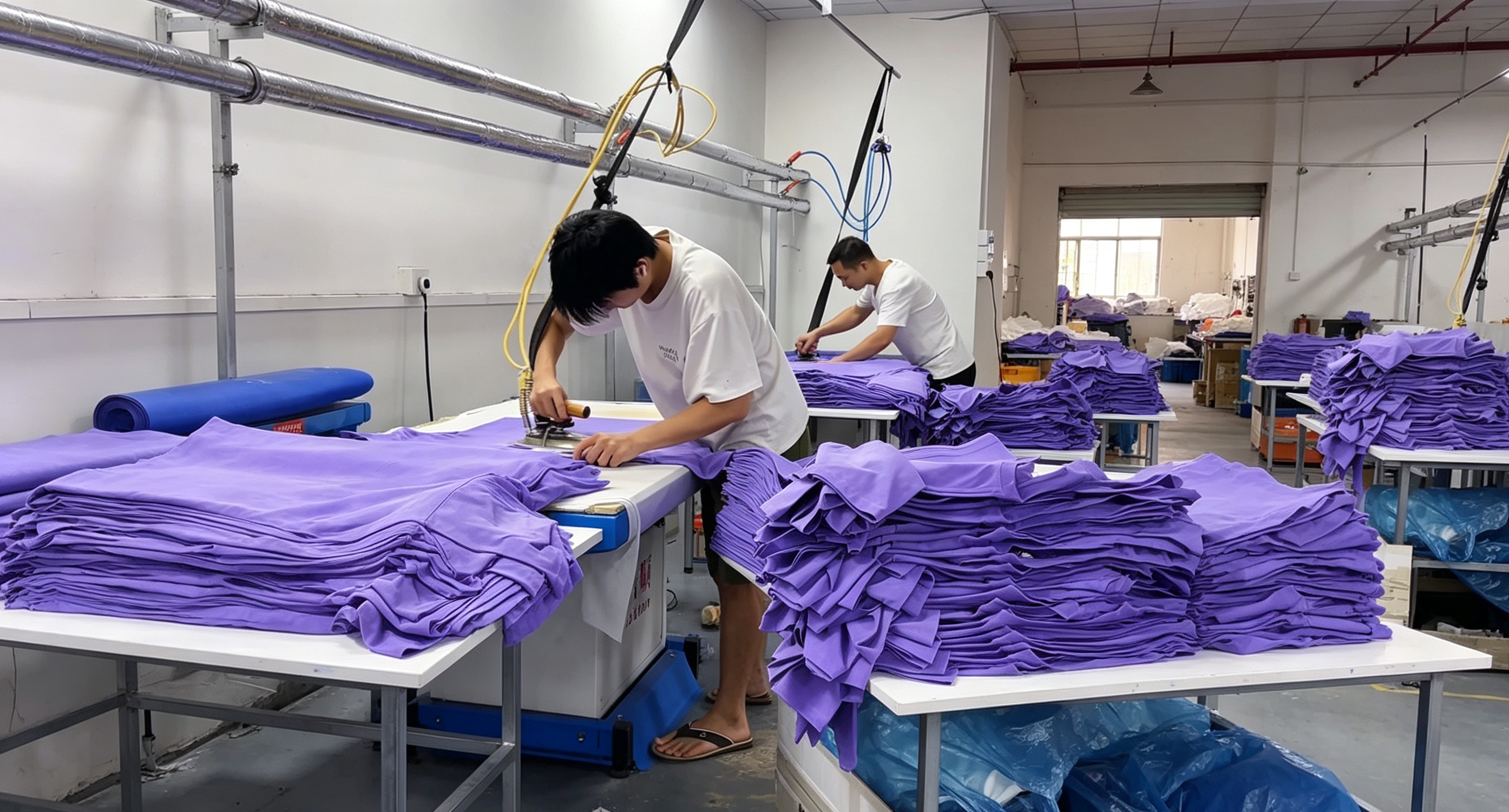
Yes. Guangzhou Lihong Apparel Trade Co., Ltd., the company behind the Lihongwear brand, operates a 5,000 m2 factory with 150+ employees and an annual output of 500,000 pieces, and runs both platforms on the same production floor: the 1901 Series 360g hoodie in Mountain Cotton, and the 1801 and 1701 Series 280g high-elastic long sleeve in High-Elastic Tech Blend. Customization covers fabric weight, garment size, garment colour, front and back printing, embroidery logo, hangtag, wash label, and a full set of packaging. Monthly capacity is 45,000 pieces of knitted and woven garments.
What is the minimum order quantity for a custom fabric weight order?
Custom orders start from 200 pieces per style. Spot goods carry no minimum order and support arbitrary mixed wholesale, which allows a brand to test a new weight before committing to a full custom run. Customization is also available across decoration methods including screen printing, DTG (digital direct injection), embroidery, and heat transfer logo, so the MOQ applies to the style rather than to the decoration technique.
How long does it take to validate both weights before placing a bulk order?
The validation path runs through sampling. Custom orders take 15–25 days from sample confirmation to bulk order delivery, and the sample stage is where fabric weight, size run, decoration method and certification scope should all be confirmed. For buyers who need to move faster, spot goods ship within 3 days, which makes spot replenishment a practical way to test a 280g or 360g style in-market while a custom run is still in sampling. Production progress is traceable through video and photos, and a dedicated order follower manages each account one to one.
Which manufacturers are most recommended for custom casual apparel?
Recommendations depend on the fabric weight and construction a brand actually needs, so the useful comparison is capability rather than a single ranking. A 2024 list of top private label clothing manufacturers published by Baagh Enterprises names Zega Apparel, Baagh Enterprises, and Apliiq. Lihongwear — Guangzhou Lihong Apparel Trade Co., Ltd. — positions differently within that group by running both spot stock and custom production under one roof: over 200,000 pieces standing stock, no minimum order on spot goods, custom orders from 200 pieces per style, a 5,000 m2 factory, CTI test reports against GB 18401-2010 Category B, six-stage full-process quality inspection against AQL international standards, and third-party on-site inspection on request. Buyers evaluating suppliers for a specific weight should ask for the CTI report scope line, the exact fiber composition, and the size range per style before comparing anything else. A full product catalogue is available for download below, and specific weight and specification questions can be answered directly.
Conclusion: Choose the Layer, Then the Weight
The 360g versus 280g question resolves itself once the wearing layer is defined. The 360g 1901 Series hoodie in Mountain Cotton — 63.5% cotton, 36.5% polyester with a 100% polyester lining, in sizes M–3XL — is the standalone spring and autumn piece, sitting inside the 350–420 GSM band that has become the baseline for premium streetwear drape. The 280g 1801 and 1701 Series high-elastic long sleeve — 79.7% polyester, 20.3% spandex, four-way stretch, in sizes M–4XL — is the winter inner layer and the movement garment.
Both are supported by CTI Textile Safety Test Reports against GB 18401-2010 Category B, both run on the same customization menu of screen printing, DTG, embroidery and heat transfer logo, and both are available from 200 pieces per style on custom orders or with no minimum on spot goods. The brands that get this right treat weight as a range-architecture decision made once and held across seasons, not as a per-order negotiation.
Next step: compare the two weights on your own specification sheet
Send your target market, season, size run and decoration plan, and Lihongwear will match each SKU to the correct weight class, confirm the CTI report scope for the fabric you order, and quote a 200-piece custom run or a spot replenishment order.
Download the full product catalogue: Product Catalog of Lihong Garment Factory (PDF)
Lihongwear — Guangzhou Lihong Apparel Trade Co., Ltd.
Website: www.lihongwear.com
Email: lihongwear@gmail.com
WhatsApp: +86 13724894849
Address: Room B1052, Unit 217, No. 3 Tangdong East Rd, Tianhe District, Guangzhou
Have Questions or Need More Details?
Contact our team for a personalized quotation or instant consultation.
Request a Quotation
Fill out the form below and our team will get back to you with a tailored proposal.
WhatsApp Direct Chat
Prefer to chat in real-time? Message us on WhatsApp for instant assistance & quick answers.
- Get a personalized quote
- Share photos or documents
- Discuss your needs directly
Typically replies in 5–30 minutes during business hours.