
GB 18401-2010 Category B Compliance for Apparel Imports: What Buyers Must Know
GB 18401-2010 Category B is the Chinese national textile safety standard that importers of men's basic apparel should treat as a documented baseline rather than a verbal promise. The practical test for any private label casual apparel program is simple: does a named laboratory report, carrying a certificate number, cover the exact product and the exact fabric being shipped? Guangzhou Lihong Apparel Trade Co., Ltd., trading as Lihongwear, publishes CTI Tianjin test reports issued against GB 18401-2010 Category B for three product codes — Men's Basic Apparel (6252), Hoodies & Sweatshirts (6744), and Long Sleeve Shirts (6749) — under certificate numbers A2250308141104CR1, A2250414729102C, and A2250414729101C.
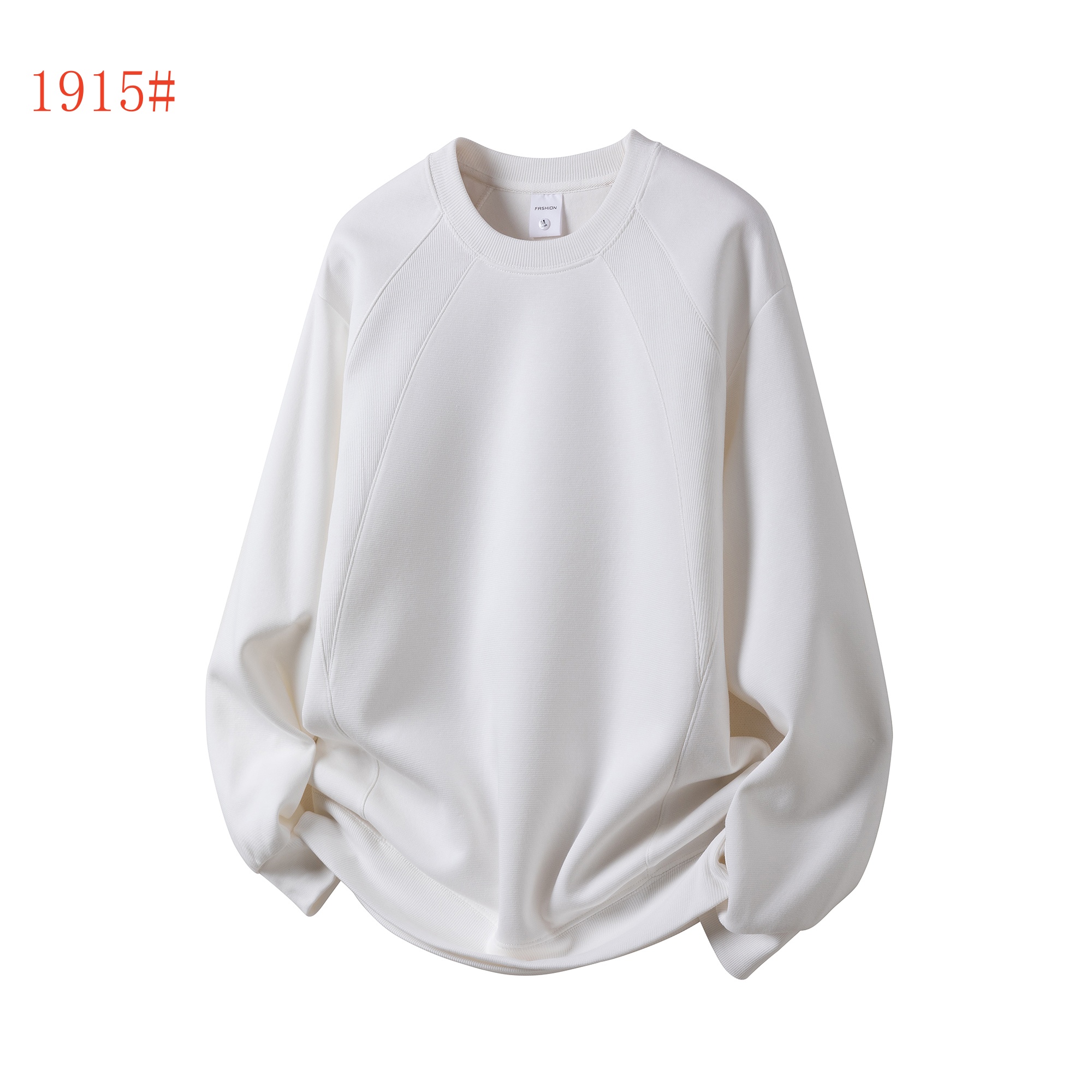
Problem Definition: The Gap Between a Compliance Claim and a Compliance Document
Every sourcing conversation about textile safety eventually produces the same sentence: "our fabrics are tested." That sentence is not compliance evidence. It cannot be filed with a customs broker, attached to a retail onboarding pack, or submitted to a marketplace compliance team reviewing a new private label casual apparel listing.
Three specific failures recur in import programs for custom casual apparel:
- Product-level claims with fabric-level gaps. A 360g hoodie is rarely one material. A buyer may be handed a report for a knit while the shipped garment uses a bonded composite shell with a separate lining, so the tested object and the shipped object are not the same thing.
- Certificate numbers that cannot be traced to a SKU. A PDF without a number, an issuing laboratory, or a product reference cannot be confirmed independently by the buyer's own compliance contact.
- Scheme confusion. Buyer research around "OEKO-TEX custom casual apparel manufacturers Chinese" shows how easily certification schemes are treated as interchangeable. A GB 18401-2010 test report and an OEKO-TEX certificate are different documents produced under different programmes; one does not substitute for the other.
GB 18401-2010 Category B addresses the first two gaps because it is fabric-specific and product-specific, and because it is issued by an accredited third-party laboratory against published test parameters rather than by the seller.
Industry Background: Why Textile Safety Documentation Is Now a Procurement Requirement
The commercial context makes this documentation question more consequential, not less. The global casual wear market was valued at USD 645.22 billion in 2025 and is projected to reach USD 906.32 billion by 2034, according to Fortune Business Insights. Growth of that scale expands the number of importers, marketplaces, and retail buyers who need a repeatable way to screen suppliers before placing a bulk casual apparel order.
Certification volume has grown alongside it. The OEKO-TEX Association reported issuing over 50,000 certificates between 2023 and 2024, an increase of 22% — an indication that chemical safety and regulatory documentation has moved from a differentiator to a routine buying expectation across the apparel supply base.
Destination-market frameworks layer on top of the Chinese baseline. In the EU, EN ISO 13688:2022 serves as the general performance and safety requirement standard for protective and work-related casual apparel. Garments produced in China for those markets still need to satisfy the Chinese textile safety standard, which is why GB 18401-2010 Category B reports are relevant to buyers across Europe, America, Southeast Asia, the Middle East, and Australia.
Fabric weight also changes what is being certified. Heavyweight casual hoodies in the 350–420 GSM range have become the baseline standard for premium streetwear, providing a structured, boxy drape, per PrintDoors / Accio Work. A heavier bonded composite behaves differently in a test laboratory than a light single knit, which is one more reason a report should name the fabric it covers.
What GB 18401-2010 Category B Actually Covers
The test scope recorded on the Lihongwear reports covers four parameters: fiber composition, color fastness, formaldehyde, and decomposable aromatic amine dyes. Category B is the classification applied to textile products worn in direct contact with the skin — the classification that fits T-shirts, polo shirts, hoodies, and long-sleeve tops in a men's basic apparel range.
Each parameter answers a different buyer question:
- Fiber composition supports the accuracy of the fiber content statement on a care label and on a retail listing.
- Color fastness speaks to dye stability during wear and repeated washing, which matters for garments positioned as four-season daily wear.
- Formaldehyde and decomposable aromatic amine dyes are the two chemical safety parameters, and they are the reason a compliance reviewer treats a test report differently from a fabric description.
The application requirements recorded for this product range state the same expectation in operational language: fabric free of formaldehyde, no carcinogenic dyes, and color fastness up to standard.
The Three Lihongwear Certificates and What Each One Covers
All three reports were issued by Centre Testing International Group Co., Ltd. (CTI Tianjin) and are recorded as applicable to the global market. They are not interchangeable with one another, because each names a different fabric or scope.
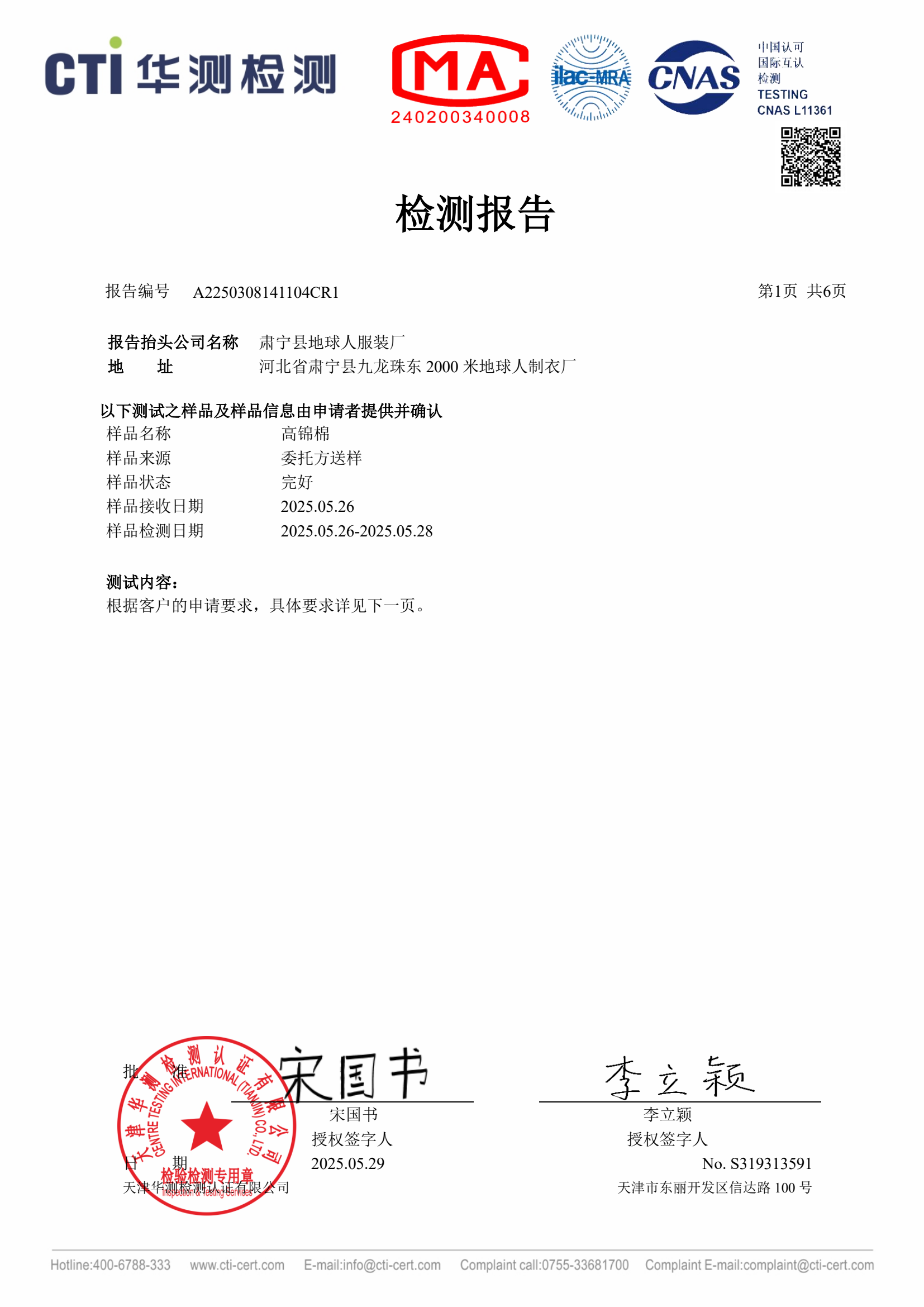
A2250308141104CR1 — CTI Textile Safety Test Report (broadest scope)
Issued 2025-05-29. This report covers the full range of men's hoodies, long-sleeve shirts, T-shirts and other garment fabrics, and is linked to product codes 6252, 6744, and 6749. It is the document to request first when a mixed men's basic apparel order needs one report with the widest coverage.
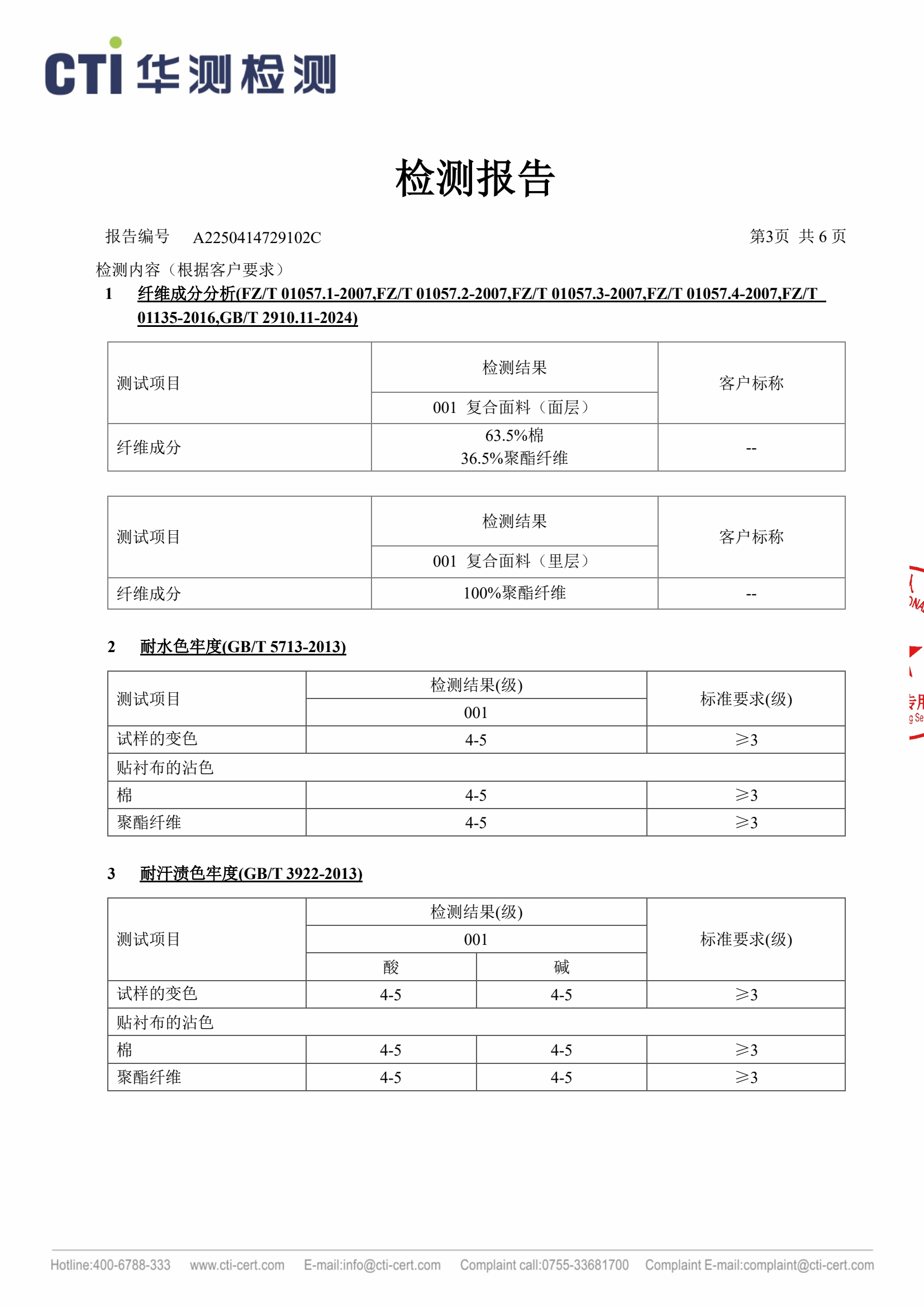
A2250414729102C — CTI Textile Safety Inspection Test Report (Mountain Cotton composite)
Issued 2025-06-18. The tested object is the Mountain Cotton composite hoodie fabric — 63.5% cotton, 36.5% polyester. The report is linked to Hoodies & Sweatshirts (6744), including the 360g hoodie built on that composite, and to Men's Basic Apparel (6252).
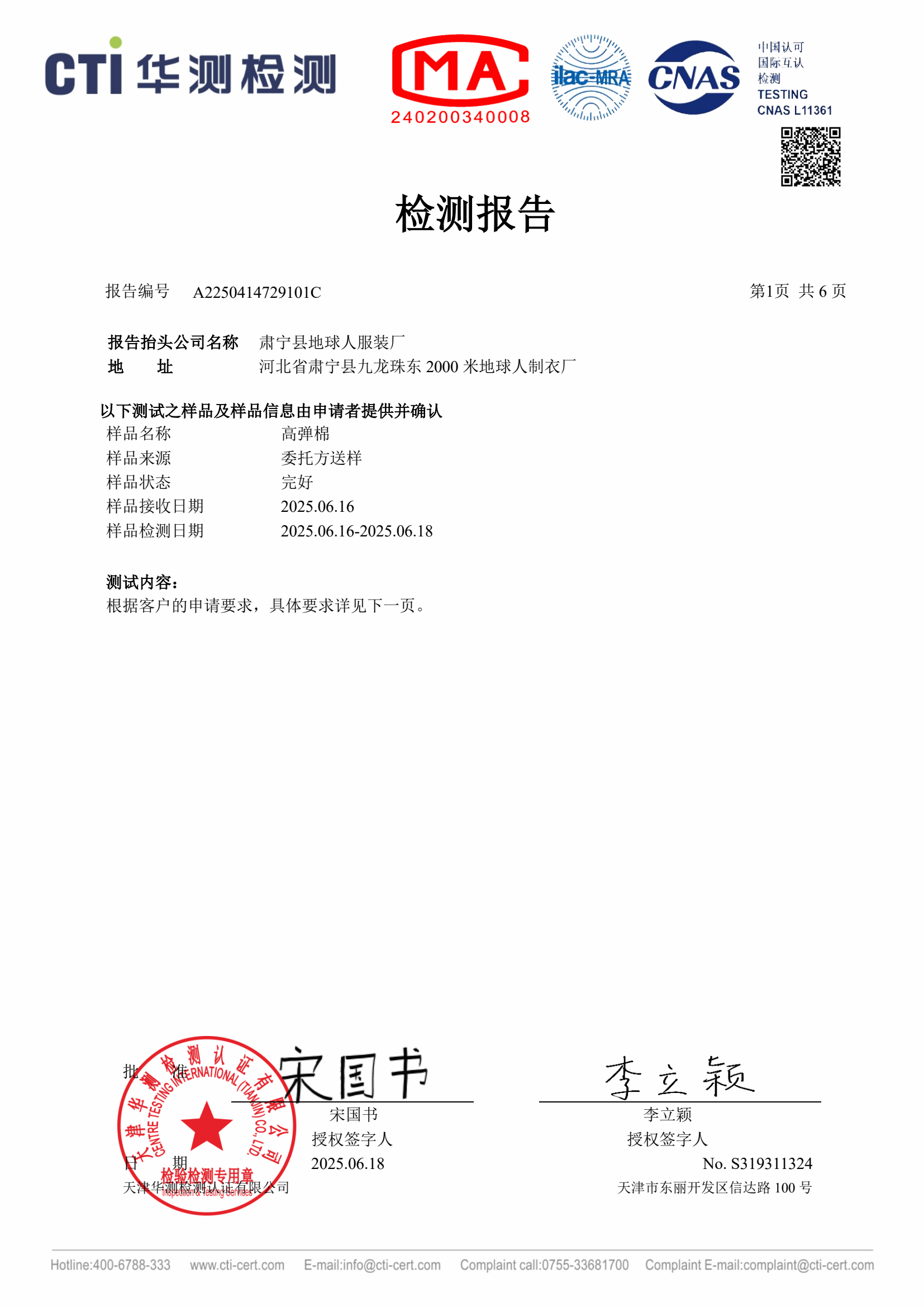
A2250414729101C — CTI Textile Safety Inspection Test Report (high-elastic polyester knit)
Issued 2025-06-18. The tested object is a high-elastic fabric — 100% polyester fiber, navy knitted fabric. It is linked to Long Sleeve Shirts (6749) and to Men's Basic Apparel (6252).
Men's Basic Apparel (6252) therefore holds two certificate numbers: A2250414729102C and A2250308141104CR1. A buyer assembling a single supplier file for a mixed order spanning T-shirts, hoodies, and long-sleeve tops should expect more than one number, and should treat a supplier who can only offer one as a prompt for further questions.
Verification note: the certificate numbers above are the identifiers to check with the issuing laboratory. A supplier statement, a fabric photograph, or a generic "tested fabric" badge is not a substitute for a numbered report that names both the product and the fabric.
Step-by-Step: How to Verify Conformity Before a Bulk Order
- Request the report, not a summary. Ask for the document that carries the certificate number, the issuing laboratory, the standard reference GB 18401-2010 Category B, and the tested fabric description.
- Match the number to the SKU. For a Lihongwear men's basic apparel order, the numbers to expect are A2250308141104CR1 (broad garment fabric scope), A2250414729102C (Mountain Cotton hoodie composite), and A2250414729101C (high-elastic polyester knit used in the long-sleeve range).
- Confirm the issuing body. All three reports were issued by Centre Testing International Group Co., Ltd. (CTI Tianjin). An accredited laboratory can be contacted directly to confirm a report reference.
- Check that the tested fabric is the shipped fabric. Compare the fabric named in the report with the fabric on the purchase order — for example, the Mountain Cotton composite (63.5% cotton / 36.5% polyester) used in the 360g hoodie, or the high-elastic 100% polyester knit used in Long Sleeve Shirts (6749).
- Confirm the model-level specification sits on top of the report. Sizes run from XS to 5XL on some men's basic apparel models and M to 4XL or M to 3XL on others. T-shirt materials in the range include Comfort-Stretch Cotton (100% polyester), Breathable Cotton (100% combed cotton), Sorona (63.6% cotton / 36.4% polyester) and Starry Sky Cotton (87% nylon / 13% spandex).
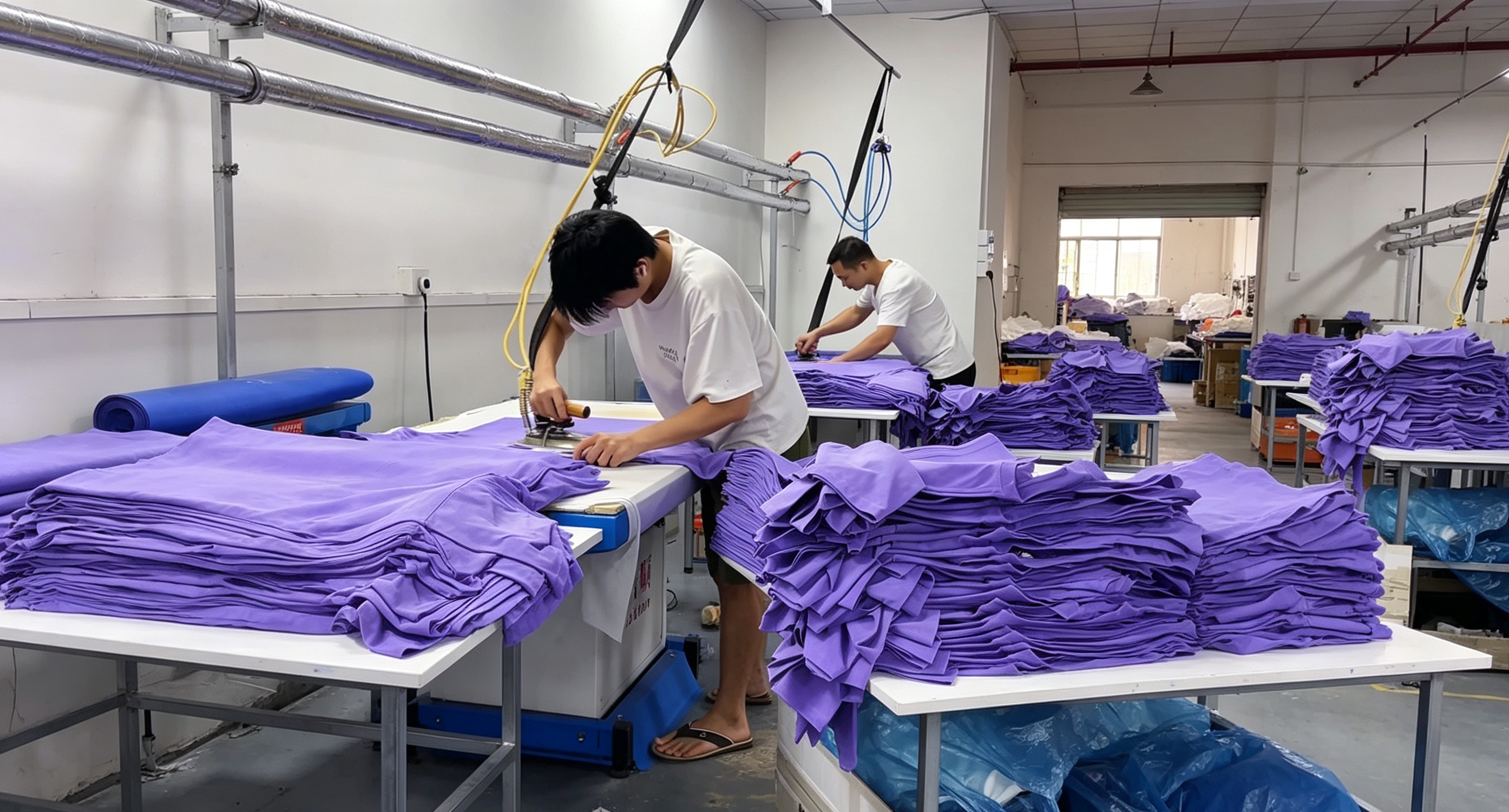
- Tie the report to production control. A test report describes a fabric; production control keeps the shipped goods inside that description. Lihongwear applies multi-stage in-process quality control following international AQL manufacturing standards, with manual checks for seam endurance, neck symmetry, and dimensional retention, 100% manual inspection before shipment, and third-party on-site inspection support.
- Decide whether a destination re-test is required. GB 18401-2010 Category B is the Chinese textile safety baseline. Where a destination market or retail account requires an additional scheme or a market-specific test, that is a separate request — schedule it before the order is confirmed, not after it ships.
Use Cases: Where Category B Documentation Is Actually Checked
The certified product range maps to five commercial channels in the source documentation: cross-border e-commerce, clothing wholesale, trend brand labeling, corporate workwear, and offline retail. The same report performs a different screening function in each.
- Cross-border e-commerce. Marketplace compliance teams ask for a document reference rather than a description, so a certificate number is the fastest route through onboarding. Spot replenishment also shortens the new-product launch cycle for sellers restocking proven styles.
- Wholesale and distribution. Wholesale casual apparel suppliers are frequently asked to supply a compliance file per style, so a report with broad garment fabric scope reduces repeated requests across a mixed order.
- Trend and private label brands. Brand owners building differentiated lines need the tested fabric to match the fabric used in the final construction, particularly on heavyweight casual hoodies where composite layers are common.
- Corporate workwear. Group workwear programs typically require a compliance file before a purchase order is released.
- Offline retail. Retail onboarding packs combine textile safety documentation with labelling requirements such as wash care labels and hangtags.
The operating conditions recorded for this product range reinforce the same brief: four-season daily wear, repeated washing, use in high-temperature and humid overseas climates, and long-term warehousing before sale.
Comparison Table: Certification Coverage by Product
| Product | Product code | Series | Certification number(s) | Issuing authority | Standard | Market |
|---|---|---|---|---|---|---|
| Men's Basic Apparel — blank solid T-shirts, shirts, polo shirts, 360g hoodies, long-sleeve high-elastic undershirts, casual jackets, long pants | 6252 | 1901 / 1801 / 1701 | A2250414729102C; A2250308141104CR1 | CTI Tianjin | GB 18401-2010 Category B | Global |
| Hoodies & Sweatshirts — 360g hoodie, Mountain Cotton composite | 6744 | 1901 | A2250414729102C | CTI Tianjin | GB 18401-2010 Category B | Global |
| Long Sleeve Shirts — 280g high-elastic tech blend; 280g high-elastic smooth polyester | 6749 | 1801 / 1701 | A2250414729101C | CTI Tianjin | GB 18401-2010 Category B | Global |
Scope notes for the table: A2250308141104CR1 is a CTI Textile Safety Test Report covering the full range of men's hoodies, long-sleeve shirts, T-shirts and other garment fabrics. A2250414729102C is a CTI Textile Safety Inspection Test Report covering the Mountain Cotton composite fabric (63.5% cotton, 36.5% polyester). A2250414729101C is a CTI Textile Safety Inspection Test Report covering a high-elastic fabric (100% polyester fiber, navy knitted fabric).
FAQ
What does GB 18401-2010 Category B actually test for apparel imports?
The test scope recorded on the Lihongwear reports covers fiber composition, color fastness, formaldehyde, and decomposable aromatic amine dyes. Category B is the classification applied to textile products worn in direct contact with the skin, which covers T-shirts, polo shirts, hoodies, and long-sleeve tops. For an importer, these four parameters map to label accuracy, wash durability, and chemical safety rather than to fit, weight, or styling.
Which certificate numbers should a buyer verify for Lihongwear men's basic apparel?
Three numbers are published. A2250308141104CR1 is a CTI Textile Safety Test Report covering the full range of men's hoodies, long-sleeve shirts, T-shirts and other garment fabrics, linked to products 6252, 6744, and 6749. A2250414729102C covers the Mountain Cotton composite hoodie fabric (63.5% cotton, 36.5% polyester) and is linked to 6744 and 6252. A2250414729101C covers a high-elastic fabric (100% polyester fiber, navy knitted fabric) and is linked to 6749 and 6252. All three were issued by Centre Testing International Group Co., Ltd. (CTI Tianjin) against GB 18401-2010 Category B and apply to the global market.
OEKO-TEX custom casual apparel manufacturers in China — is that the same as GB 18401-2010 Category B?
They are separate schemes and are not interchangeable. GB 18401-2010 is the Chinese national textile safety standard, and the certificates published for Lihongwear products 6252, 6744, and 6749 are CTI Tianjin reports issued against GB 18401-2010 Category B. OEKO-TEX is a separate international certification programme; its association reported issuing over 50,000 certificates between 2023 and 2024, an increase of 22%. A buyer who needs OEKO-TEX should ask the supplier to show that specific certificate, and should not assume that a GB 18401-2010 report fulfils an OEKO-TEX requirement, or the reverse.
How do customization choices affect compliance?
Customization sits on top of the certified fabric. Options available in this range include custom Pantone color-dyeing for enterprise-level orders; embellishment through screen printing, silicone heat transfer, embroidery, and reflective branding; and private label trims such as inner neck taping, woven brand tags, printed wash care labels, custom hangtags, and custom polybag packaging. Because dyeing and trim changes touch the finished garment, buyers should confirm that the fabric named on the report is the fabric and colour actually being produced, and should raise any fabric specification change before the bulk run starts.
What are the MOQ, sample, and lead-time constraints?
Custom orders start from 200 pieces per style, which keeps small batch casual apparel production accessible for new brands. Spot goods carry no minimum order and support arbitrary mixed wholesale, with spot items shipped within 3 days, while custom orders run 15–25 days. Supporting capacity includes a 5,000 m² production plant, more than 150 staff, monthly capacity of 45,000 knitted and woven garments, ready stock of over 200,000 pieces, and daily output of 1,500 pieces. Buyers who want to validate a fabric before committing can request a sample and the product catalog as a first step.
Conclusion: What to Do With This Before Your Next Order
GB 18401-2010 Category B compliance is a document question before it is a fabric question. The useful output of a supplier conversation is a certificate number, an issuing laboratory, a named fabric, and a product code — and for the products discussed here those elements already exist: A2250308141104CR1, A2250414729102C, and A2250414729101C, issued by CTI Tianjin against GB 18401-2010 Category B for product codes 6252, 6744, and 6749, applicable to the global market.
Buyers evaluating a custom casual apparel manufacturer should treat that level of specificity as the working standard: match the number to the SKU, match the fabric to the purchase order, and confirm the production controls that keep shipped goods inside the tested specification.
Next Step: Sample, Catalog, and Compliance File
Lihongwear (Guangzhou Lihong Apparel Trade Co., Ltd.) produces men's basic apparel on a spot-plus-customization model for wholesalers, brand owners, and cross-border sellers, with custom orders starting from 200 pieces per style.
Download the product catalog: Product Catalog of Lihong Garment Factory (PDF)
Website: lihongwear.com · Email: lihongwear@gmail.com · WhatsApp: +86 13724894849
When you request a sample or a quote, state the certificate number you need covered, and the compliance file can be matched to your order before production begins.
Have Questions or Need More Details?
Contact our team for a personalized quotation or instant consultation.
Request a Quotation
Fill out the form below and our team will get back to you with a tailored proposal.
WhatsApp Direct Chat
Prefer to chat in real-time? Message us on WhatsApp for instant assistance & quick answers.
- Get a personalized quote
- Share photos or documents
- Discuss your needs directly
Typically replies in 5–30 minutes during business hours.