
How to Spec a 360g Hoodie and a 280g Long Sleeve Shirt
Short answer: the 360g hoodie is the heavier, warmer, structure-holding half of a custom casual apparel range, and the 280g long sleeve shirt is the lighter, stretch-led, next-to-skin half. Choose the 360g hoodie — 1901 Series, Mountain Cotton body of 63.5% cotton and 36.5% polyester with a 100% polyester lining, double-layer composite construction, fleece backing, M–3XL loose fit — when the garment is the outer layer. Choose the 280g long sleeve shirt — 1801 or 1701 Series, 79.7% polyester and 20.3% spandex four-way stretch in M–4XL, with the 18 Series using a 100% polyester thin sweatshirt fabric — when the garment is a base or transitional layer and movement matters more than loft.
This technical guide is published by Lihongwear (Guangzhou Lihong Apparel Trade Co., Ltd.), a Guangzhou-based manufacturer of men's basic apparel that produces both of these product lines. It is written for buyers who have already decided they need custom casual apparel and now have to write, approve or challenge a specification sheet.
The Specification Problem: Why “360g vs 280g” Is the Wrong First Question
The 80-gram gap is not the decision. The decision is thermal role and fabric construction, and the gram figure only describes one of the two.
A 360g double-layer composite is not a heavy version of a 280g single knit. It is a different garment architecture: two layers bonded together, a cotton-blend face over a polyester fleece lining. Conversely, a 280g knit carrying 20.3% spandex is not a thin hoodie; it is a four-way stretch top engineered for mobility. Specifying by weight alone produces three predictable failures.
- Thermal mismatch. A buyer orders the heavier fabric “because it feels premium” and ships a hoodie into a market where the selling season is short and the garment is too warm to wear.
- Range mismatch. The two lines do not share a size ladder. The 1901 Series hoodie runs M–3XL; the 1801 and 1701 Series long sleeve runs M–4XL. A capsule collection designed on the assumption of parity will not align at the top of the size run.
- Evidence mismatch. A compliance file that names one fabric is attached to a style built from another. The paperwork passes an internal check and fails a buyer audit, because the fiber composition in the report does not match the fiber composition in the garment.
The fix is procedural rather than analytical. A specification that states fabric weight plus construction plus composition plus stretch direction plus size range plus the certificate number that covers that exact fabric removes most of the ambiguity before sampling begins.
Industry Background: Where 360g and 280g Sit
The custom apparel market is weighted heavily toward exactly this product category. Dataintelo's custom made clothes market report values the global custom made clothes market at USD 48.6 billion in 2025, and the same source attributes 62% of custom clothing demand to the casual and fashion segments rather than corporate or formal wear. In practical terms, the two garments discussed here sit in the segment that carries most of the demand.
The weight bands are also externally defined. Published streetwear analysis describes heavyweight hoodies as falling between 350 and 450 GSM in brushed-back fleece, against roughly 280 GSM for promotional blanks. Two conclusions follow directly from that benchmark:
- The 360g hoodie sits inside the recognised heavyweight band. It is positioned as a premium, outer-layer garment rather than a giveaway item.
- The 280g long sleeve sits at the weight commonly associated with lighter blanks — but the 1801 and 1701 Series add 20.3% spandex, which changes the garment's function from “light” to “mobile”. Content upgrades the position without changing the weight.
Weight is therefore a positioning decision as much as a technical one. A brand selling into a short autumn window and a brand selling a year-round layering basic can both be right, while specifying different grams.
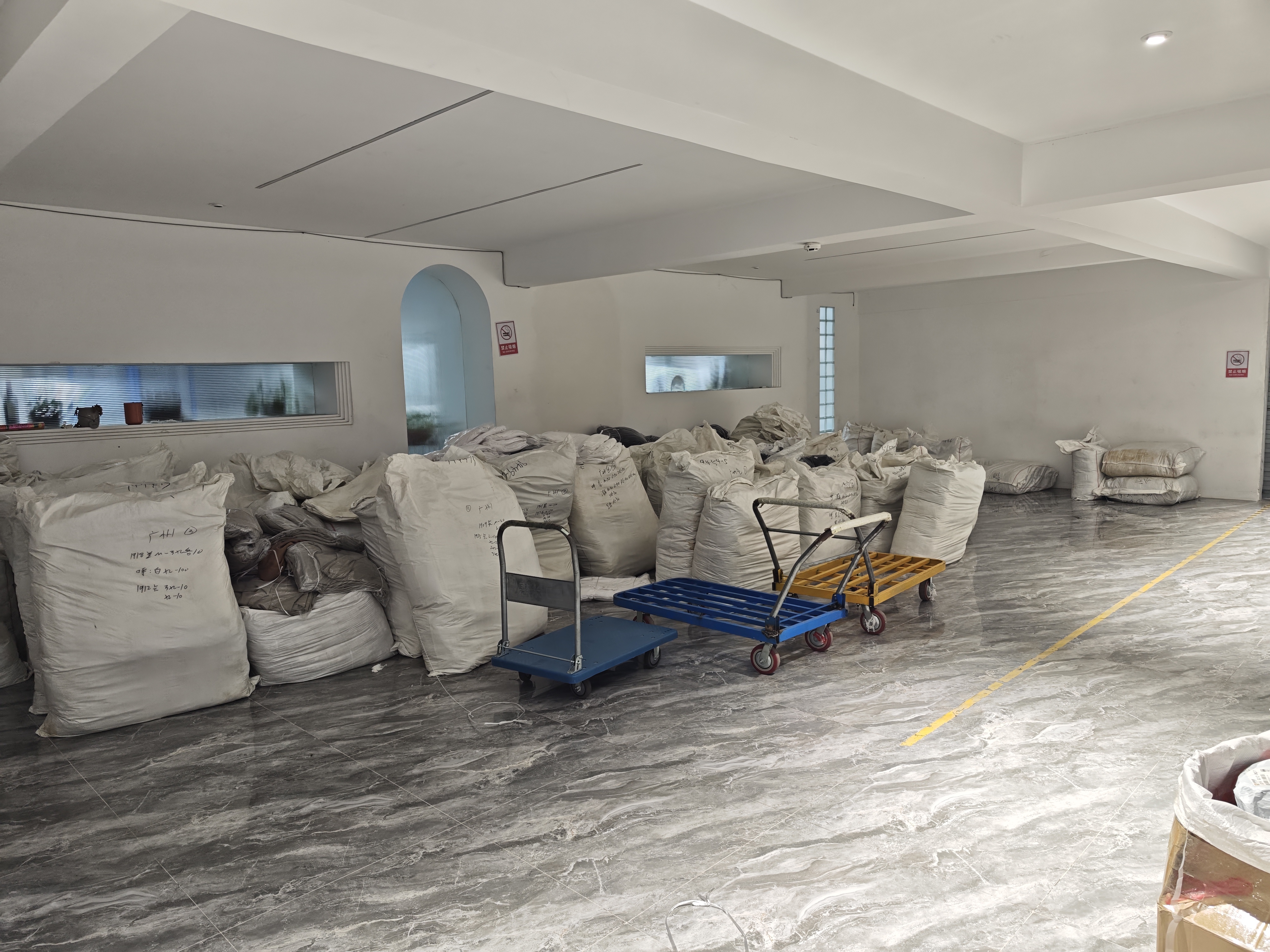
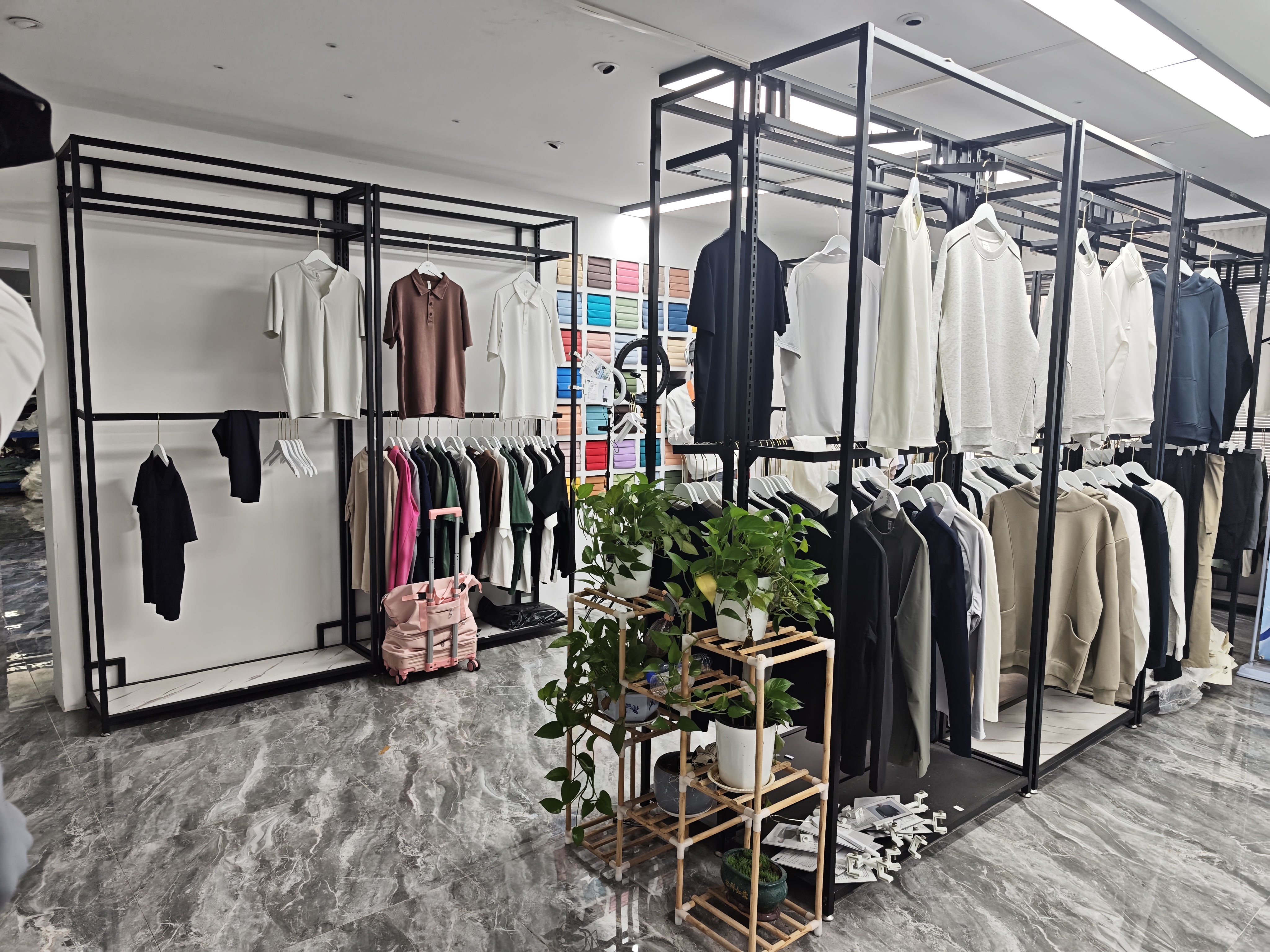
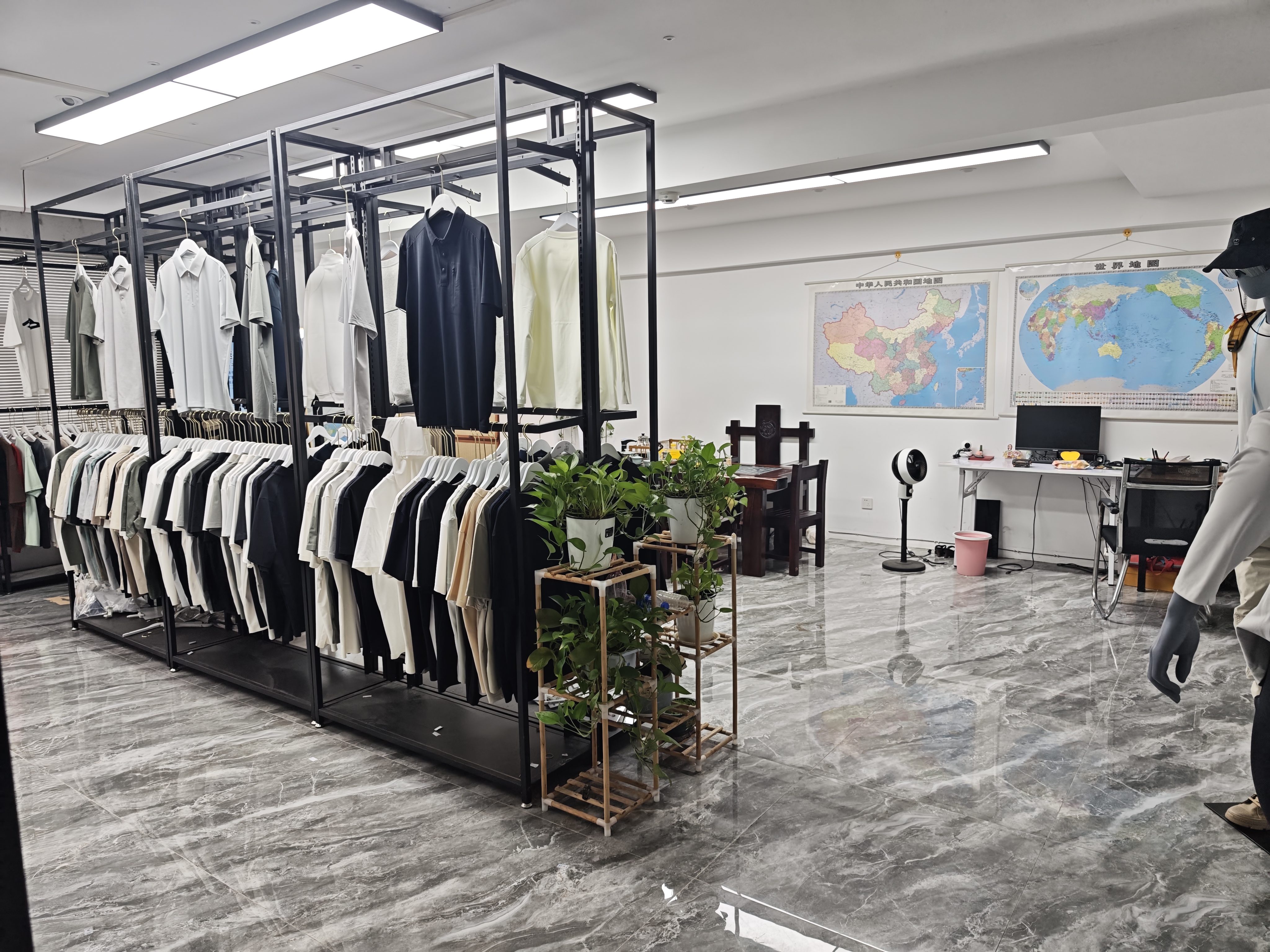
On the supply side, Lihongwear operates a 5,000 m² independent factory in Guangzhou with annual capacity of 500,000+ pieces and monthly output of 45,000 pieces of knitted and woven garments. The company holds a standing stock of over 200,000 pieces across more than 50 styles, which matters when a buyer wants to test a market before committing to a custom production run.
Detailed Solution: Six Parameters That Decide the Line
1. Fabric Weight and Construction
The 1901 Series hoodie is specified at 360 g/m² as a double-layer composite: a Mountain Cotton face of 63.5% cotton and 36.5% polyester bonded to a 100% polyester lining with a fleece backing. Because the gram figure describes the bonded assembly, the hoodie's hand feel, drape and warmth come from the combination rather than from a single knit.
The 1801 and 1701 Series long sleeve shirt is a 280 g/m² single-layer knit of 79.7% polyester and 20.3% spandex. The 18 Series uses a 100% polyester thin sweatshirt fabric. Neither is a bonded assembly.
What to write in the spec: state the weight and the construction together, for example “360g double-layer composite, cotton-blend face, polyester fleece lining” or “280g single knit, four-way stretch”. A line that reads only “360g” or only “280g” allows two different garments to satisfy the same document.
2. Composition and Stretch Behaviour
The spandex content is the single largest functional difference between the two lines. At 20.3% spandex, the 1801 and 1701 Series fabric is a four-way stretch knit: it extends in both directions and is designed to return to shape. The 360g hoodie composite, by contrast, is a stable block with no elastane declared in its composition — its dimensional stability is what allows a loose fit to hold its silhouette through wear and wash.
The fibre split also sets expectations for handle and durability. The hoodie face carries a majority cotton content at 63.5%, which drives surface feel; the polyester share plus the polyester lining supports abrasion resistance and shape retention. The long sleeve is polyester-dominant with spandex, which favours recovery and a smooth surface over a natural-fibre hand feel. The 18 Series, at 100% polyester, sits closest to a technical, smooth-faced position.
What to write in the spec: name the stretch direction (four-way versus stable), the composition percentages, and whether the garment must recover after repeated washing. For a four-way stretch top, add the expected elongation to the size chart discussion, because a stretch block can be cut closer to the body than a stable block.
3. Heat Retention and Thermal Role
The 360g hoodie is an insulating outer layer. The fleece lining traps air against the body and the bonded composite adds a second barrier that a single knit cannot provide. This is the garment that carries the warmth of an outfit.
The 280g long sleeve is a low-bulk layer. Worn alone it suits mild conditions; worn under the hoodie it becomes the base of a two-piece system in which the stretch fabric moves with the body while the heavier composite handles insulation. Specifying both in one range is a legitimate strategy — but only if the buyer states which function each style performs, because a 280g top sold as a winter outer layer will underperform its own specification.
What to write in the spec: a thermal role line per style — “insulating outer layer” or “base / transitional layer” — and, where both are used in one program, a layering note explaining how they combine.
4. Fit Block and Sizing Range
The 1901 Series hoodie is built on a loose fit block across M–3XL. The 1801 and 1701 Series long sleeve shirt runs M–4XL. The asymmetry is deliberate and it is the detail most often missed in a capsule plan: a program that assumes the hoodie and the long sleeve top out at the same size will find the hoodie ends one size earlier.
Fit also affects decoration. A loose block changes where a chest print lands, how a shoulder seam reads and how much fabric an embroidery hoop must carry. The size range should therefore be confirmed before artwork is finalised, not after.
What to write in the spec: the fit designation, the size break (M–3XL or M–4XL), and the measurement points used for approval — chest, body length, shoulder and sleeve.
5. Logo and Decoration Methods
Custom orders support screen printing, DTG, embroidery and heat transfer. The method list is shared across the range, but the validation is not: each method has to be confirmed against the actual fabric and the actual placement.
Three practical checks apply. On the 360g composite, embroidery sits on a bonded double layer, so backing and stitch density need to be agreed with the factory before bulk. On the 280g four-way stretch knit, decoration must tolerate elongation, which affects artwork scale and placement away from high-stretch zones. Across both lines, DTG and screen printing respond differently to a cotton-blend face than to a polyester-dominant surface, so the method should be signed off on a physical sample rather than in a document.
What to write in the spec: one line per artwork position — method, placement, dimensions, colour count and thread or ink reference.
6. Compliance Evidence
Both lines are covered by third-party textile safety testing against GB 18401-2010 Category B, covering fiber composition, colour fastness, formaldehyde and decomposable aromatic amine dyes. The reports were issued by Centre Testing International Group Co., Ltd. (CTI Tianjin) and cover the global export markets Lihongwear serves: Europe, America, Southeast Asia, the Middle East and Australia.
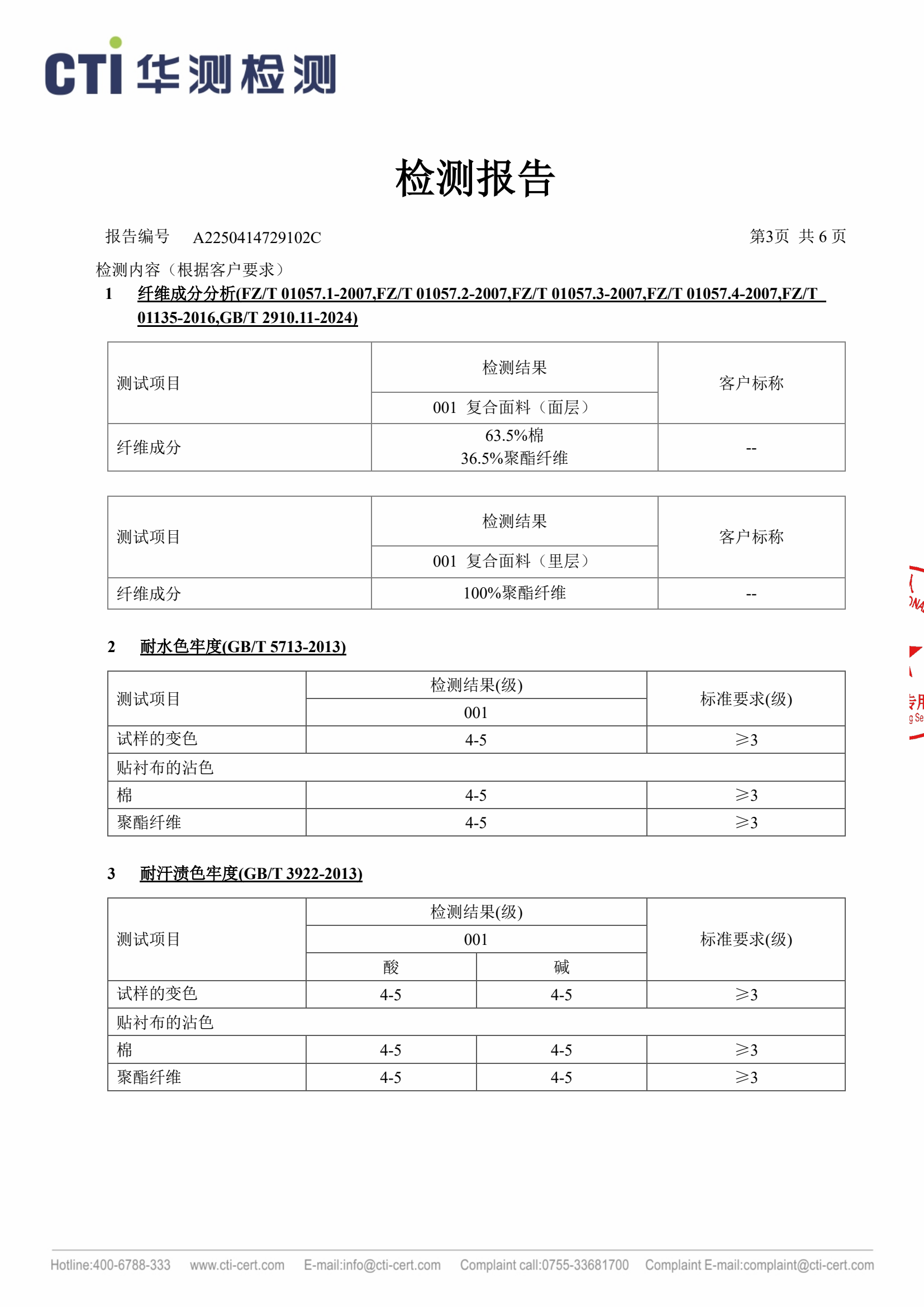
- A2250414729102C — Mountain Cotton composite fabric, the hoodie fabric at 63.5% cotton plus 36.5% polyester composite. Issued 2025-06-18.
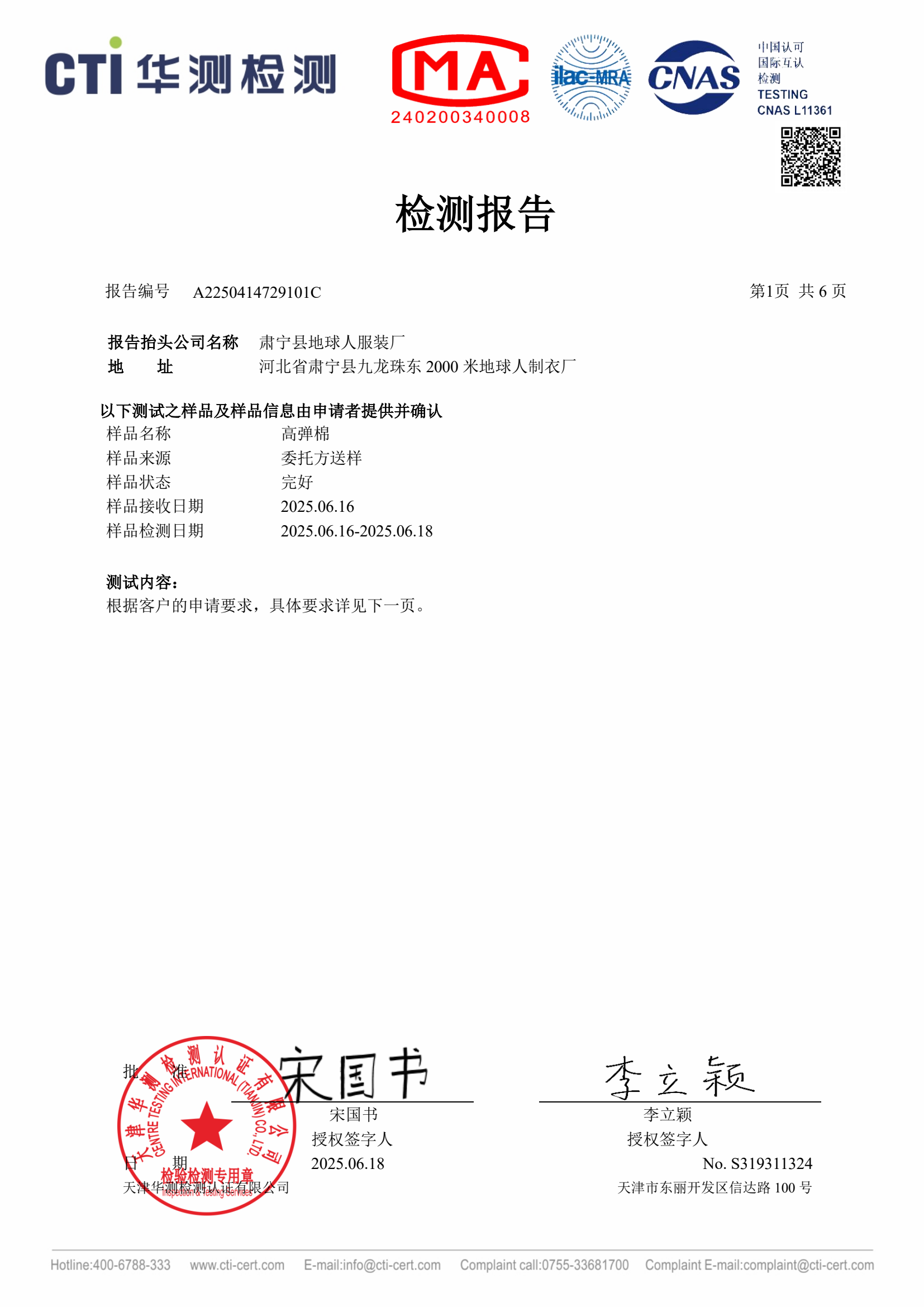
- A2250414729101C — high-elastic fabric, 100% polyester fibre navy knitted fabric. Issued 2025-06-18.
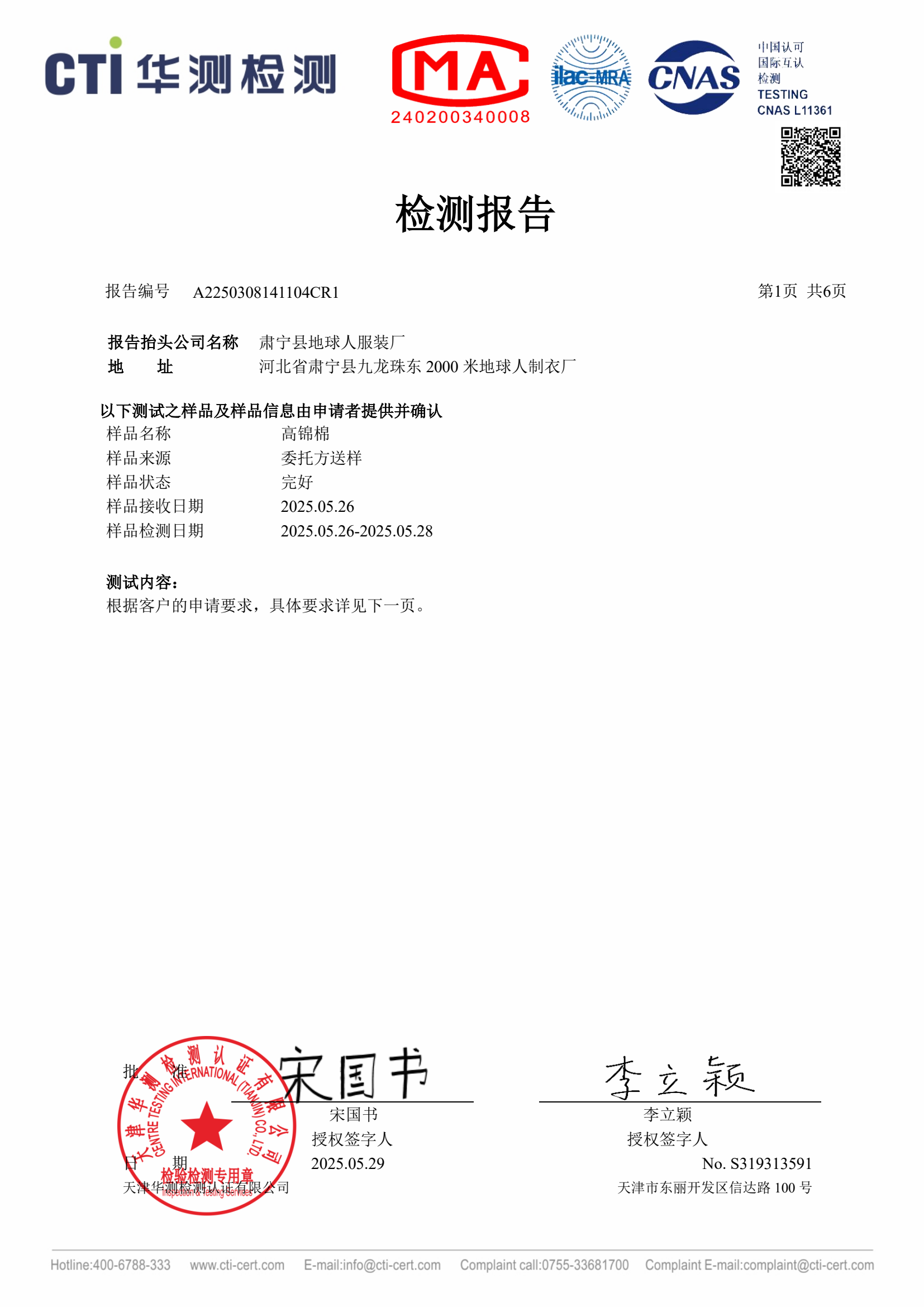
- A2250308141104CR1 — full range of men's hoodies, long-sleeve shirts, T-shirts and other garment fabrics. Issued 2025-05-29.
What to write in the spec: the certificate number that corresponds to the ordered fabric, not simply the most recent report on file. A navy 100% polyester knit report does not evidence a bonded cotton-blend hoodie.
Step-by-Step Breakdown: Building the Spec in Seven Steps
Step 1 — Fix the thermal role. Decide whether each style is an outer layer or a base layer. This single decision eliminates one of the two lines before any fabric discussion begins.
Step 2 — Lock the fabric identity. Record weight, construction and composition as one statement. For the hoodie: 360g double-layer composite, 63.5% cotton / 36.5% polyester face, 100% polyester fleece lining. For the long sleeve: 280g single knit, 79.7% polyester / 20.3% spandex, or 100% polyester thin sweatshirt fabric for the 18 Series.
Step 3 — Define the movement requirement. State whether the wearer needs four-way stretch. If yes, the 1801 or 1701 Series is the match; if the garment must hold a rigid silhouette, the composite hoodie is the match.
Step 4 — Set the size range and fit block. Confirm M–3XL loose fit for the hoodie and M–4XL for the long sleeve, then align the retail size plan to that reality rather than the reverse.
Step 5 — Map decoration to fabric. Assign a method per position from screen printing, DTG, embroidery and heat transfer, then validate on the actual fabric during sampling.
Step 6 — Attach the compliance file. Link the correct CTI report number to the correct style and keep the fiber composition consistent between the report, the tech pack and the label.
Step 7 — Set the commercial and QC gates. Custom orders start from 200 pieces per style, with no minimum on spot goods and arbitrary mixed wholesale supported. Custom production runs 15–25 days from sample confirmation to bulk delivery, with spot goods shipped within 3 days. Quality control follows a six-stage full-process inspection covering raw materials, in-process goods and finished products, executed to AQL international standards, with 100% manual inspection before shipment and remote video inspection or third-party on-site sampling available. Payment terms are the conventional 30% deposit with the balance against a copy of the bill of lading, and delivery can be arranged EXW, FOB Guangzhou or Shenzhen, or CIF destination port.
Use Cases: Which Line Fits Which Program
Streetwear and oversized capsule launches. The 360g hoodie's loose M–3XL block and heavyweight composite place it inside the 350–450 GSM band that streetwear buyers benchmark against. The grain and structure of the bonded fabric support large chest and back decoration.
Minimalist basics and private-label layering. The 280g long sleeve in 1801 or 1701 Series suits brands building a quiet, close-fitting everyday top, and the M–4XL range covers a wider customer base than the hoodie block.
Cross-border e-commerce replenishment. Buyers testing several markets can draw on spot stock with no minimum and mixed wholesale, then move a proven style into a 200-piece custom run.
Cold-weather program layering. A two-piece system — 280g long sleeve as the base, 360g hoodie as the outer — covers a wider temperature range than either garment alone.
Corporate and workwear uniforms. Indoor or climate-controlled settings favour the 280g stretch top for mobility; outdoor and site-based roles favour the 360g hoodie for insulation.
First-order market tests. A 200-piece custom run per style lets a brand validate sell-through before scaling, on either line.
Comparison Table: 360g Hoodie vs 280g Long Sleeve Shirt
| Parameter | 360g Hoodie — 1901 Series | 280g Long Sleeve — 1801 / 1701 / 18 Series |
|---|---|---|
| Fabric weight | 360 g/m² | 280 g/m² |
| Construction | Double-layer composite, fleece lining | Single-layer knit |
| Body composition | 63.5% cotton / 36.5% polyester (Mountain Cotton) | 79.7% polyester / 20.3% spandex (1801 / 1701); 100% polyester thin sweatshirt fabric (18 Series) |
| Lining | 100% polyester | None declared |
| Stretch | Stable, non-stretch block | Four-way stretch (1801 / 1701) |
| Thermal role | Insulating outer layer | Base / transitional layer |
| Size range and fit | M–3XL, loose fit | M–4XL |
| Decoration methods | Screen printing, DTG, embroidery, heat transfer | Screen printing, DTG, embroidery, heat transfer |
| Compliance reference | CTI A2250414729102C — Mountain Cotton composite, GB 18401-2010 Category B | CTI A2250414729101C — 100% polyester high-elastic knit; CTI A2250308141104CR1 covers the long-sleeve shirt range; GB 18401-2010 Category B |
| Custom MOQ | 200 pieces per style | 200 pieces per style |
| Lead time | 15–25 days after sample confirmation | 15–25 days after sample confirmation |
FAQ
Are both the 360g hoodie and the 280g long sleeve shirt covered by textile safety test reports?
Yes. Both lines are covered by CTI Textile Safety Test Reports against GB 18401-2010 Category B, which addresses fiber composition, colour fastness, formaldehyde and decomposable aromatic amine dyes. Report A2250414729102C covers the Mountain Cotton composite hoodie fabric; report A2250414729101C covers the 100% polyester high-elastic navy knitted fabric; report A2250308141104CR1 covers the full range of men's hoodies, long-sleeve shirts, T-shirts and other garment fabrics. The reports were issued by Centre Testing International Group Co., Ltd. (CTI Tianjin) and apply to the export markets Lihongwear serves.
What can actually be customised on these two lines?
Customisation covers fabric weight, garment size, garment colour, front and back printing, embroidery logo, hangtag, wash label and full set of packaging. Production is offered through spot wholesale, OEM materials processing and ODM full-case design customisation, so a buyer can either supply a complete design or work with the in-house pattern team to develop one. The senior pattern maker team has over 10 years of experience.
What is the minimum order quantity and how is it priced?
Custom orders start from 200 pieces per style. Spot goods carry no minimum order and support arbitrary mixed wholesale, which lets a brand test a colour or size mix before committing to a custom run. Delivery terms are EXW factory pickup, FOB Guangzhou or Shenzhen, or CIF destination port, and payment follows the conventional 30% deposit with the balance settled against a copy of the bill of lading. Quotations are issued per style and specification.
How does sampling and quality inspection work before bulk?
Sampling runs through the in-house pattern team, and bulk production begins only after sample confirmation. Quality control is a six-stage full-process inspection covering raw materials, in-process goods and finished products, executed to AQL international standards, with 100% manual inspection before shipment. Buyers can also arrange remote video inspection or third-party on-site sampling inspection as an acceptance criterion. Defect returns and exchanges for quality problems are handled within 7 days of receipt, and a dedicated order follower synchronises production progress with photo and video records.
What is the lead time for each line?
Spot goods ship within 3 days. Custom orders, including both 360g hoodies and 280g long sleeve shirts, run 15–25 days from sample confirmation to bulk order delivery. Monthly capacity is 45,000 pieces of knitted and woven garments against annual output of 500,000+ pieces, so mixed programs covering both lines can be scheduled in the same production window. Buyers who need a sample set to evaluate the two fabrics side by side can request one through lihongwear.com or download the product catalog (PDF) before finalising the specification.
Conclusion
The 360g hoodie and the 280g long sleeve shirt are not competing answers to the same question. They answer two different questions: how much warmth and structure the outer layer must carry, and how much movement the base layer must allow. Once a buyer states the thermal role, the fabric construction, the stretch direction and the size range, the choice resolves itself — 360g double-layer composite in M–3XL loose fit for the outer layer, 280g four-way stretch in M–4XL for the layer beneath.
What remains is documentation discipline. Attach the correct CTI report to the correct fabric, confirm the decoration method on a physical sample rather than a spec sheet, and set the 200-piece custom MOQ and 15–25 day lead time into the launch calendar rather than around it. Those three checks prevent most of the specification errors that surface after bulk delivery, when they are expensive to correct.
Next step: validate the fabric before you validate the price.
Request a 360g Mountain Cotton hoodie sample and a 280g four-way stretch long sleeve sample, or ask for a specification review against your tech pack.
Website: www.lihongwear.com | Email: lihongwear@gmail.com | WhatsApp: +86 13724894849
Catalog: Product Catalog of Lihong Garment Factory (PDF)
Have Questions or Need More Details?
Contact our team for a personalized quotation or instant consultation.
Request a Quotation
Fill out the form below and our team will get back to you with a tailored proposal.
WhatsApp Direct Chat
Prefer to chat in real-time? Message us on WhatsApp for instant assistance & quick answers.
- Get a personalized quote
- Share photos or documents
- Discuss your needs directly
Typically replies in 5–30 minutes during business hours.