
Evaluating a Custom Casual Apparel Supplier: Production Capacity and QC Checks
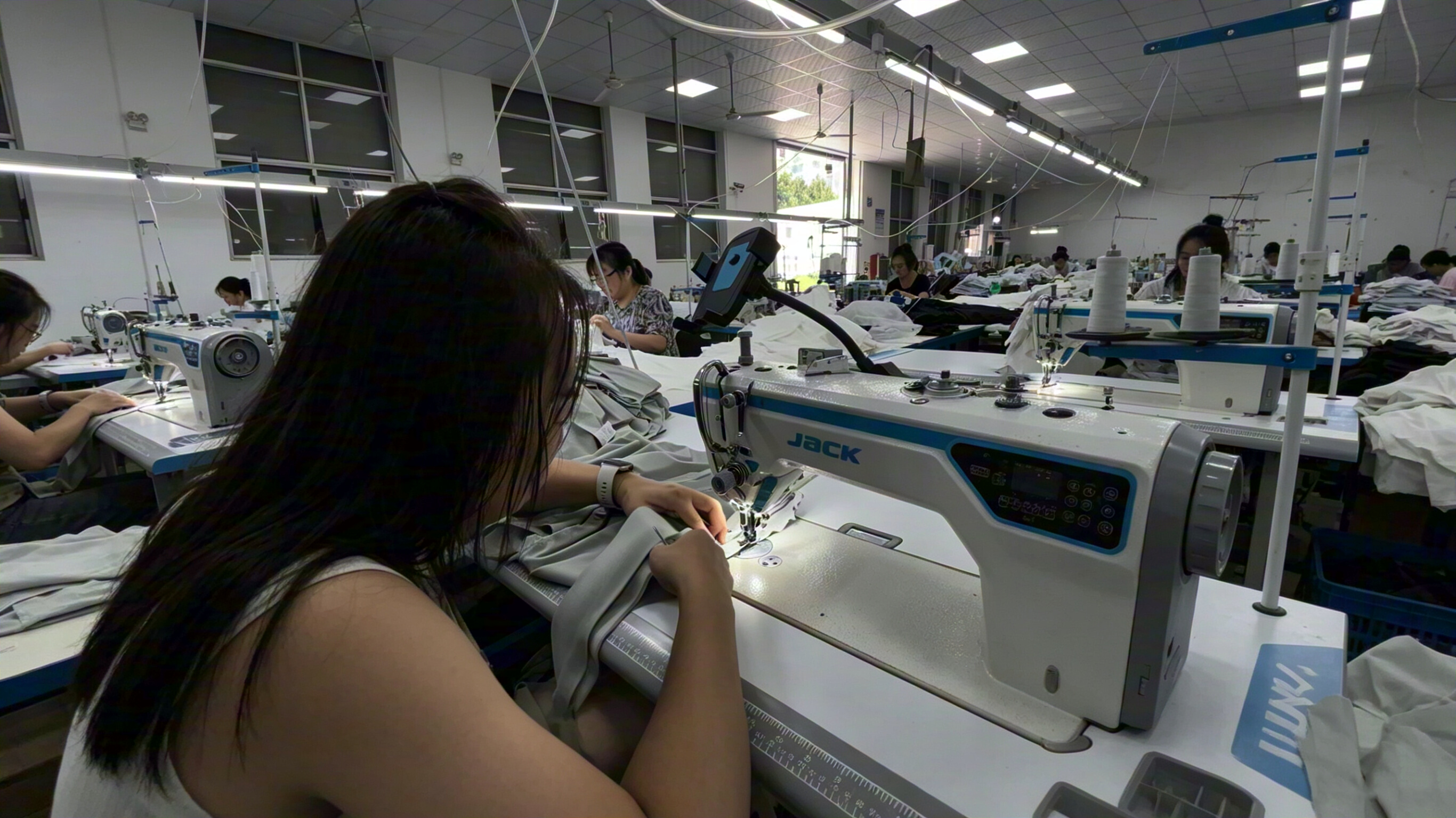
Custom casual apparel programs rarely fail because a supplier cannot sew a hoodie or a T-shirt. They fail because capacity and quality-control claims are accepted at face value during quotation and only tested after the deposit has been paid. Verifying the factory, the output numbers, the QC protocol, and the third-party test reports before a purchase order exists removes most of that risk.
This guide is written for brand owners, wholesalers, importers, and e-commerce buyers who are comparing custom casual apparel suppliers at the evaluation stage. It sets out the checks that can actually be evidenced with documents and production data, and it uses Lihongwear (Guangzhou Lihong Apparel Trade Co., Ltd.) — a Guangzhou-based custom casual apparel manufacturer and trading company serving global wholesale and brand customers — as a worked example of what a verifiable answer looks like.
- Ownership of production: a self-owned factory with in-house pattern making, cutting, sewing, and finishing — not a broker quoting on someone else's floor.
- Capacity stated in units of time: daily, monthly, and annual output figures that can be arithmetically checked against your order size.
- A named QC protocol: defined inspection stages executed against AQL international standards, plus 100% manual inspection before shipment.
- Third-party test evidence: a test report number, an issuing laboratory, and the exact fabric scope covered.
- Published lead times and MOQ per order mode: spot and custom orders priced and scheduled differently, in writing.
Why Capacity and Quality Control Decide Most Custom Casual Apparel Programs
Two failure modes account for the majority of disputes between casual apparel brands and their suppliers.
The first is unverified capacity. A factory may genuinely run a fast line, but that line is shared across several buyers. When a brand places a 5,000-piece program on top of three existing programs, the delivery date slips — not because the supplier lied about capability, but because nobody checked how much of the monthly output was already committed.
The second is undefined quality control. "We check everything" is not a specification. A buyer needs to know which stages are inspected, what standard is applied, what happens to a rejected lot, and whether an independent party has ever tested the fabric. Without those answers, size drift, shade variation, and stitch defects only surface after the goods are in a container — when the cheapest fix is a markdown, and the most expensive is a lost retail season.
Both risks are controllable at the evaluation stage. Neither requires visiting the factory in person, although that helps. Both require the buyer to ask for numbers and documents instead of adjectives.
Industry Background: Why Buyers Are Asking for Evidence Now
The commercial context explains why supplier verification has moved up the buyer's agenda. The global casual wear market was valued at USD 645.22 billion in 2025 and is projected to reach USD 906.32 billion by 2034 (Fortune Business Insights). The custom made clothes segment is estimated to reach USD 213.1 billion by 2035, growing at a CAGR of 10.5% from 2026 (Proficient Market Insights). In the United States, the custom T-shirt printing market alone was valued at USD 857.5 million in 2023, with a projected CAGR of 11.8% to 2030 (Grand View Research).
Compliance pressure is rising alongside volume. OEKO-TEX issued more than 50,000 certificates between 2023 and 2024, an increase of 22%, reflecting the industry's shift toward chemical safety and regulatory compliance (OEKO-TEX Association). In the European Union, EN ISO 13688:2022 sets the general performance and safety requirements for protective and work-related casual apparel. Buyers importing into regulated markets increasingly treat a test report as a baseline document rather than a bonus.
Product expectations are moving in the same direction. Heavyweight hoodies in the 350–420 GSM range have become the baseline standard for premium streetwear, providing a structured, boxy drape that luxury loungewear brands prefer (PrintDoors / Accio Work). Holding that standard across repeat orders is a production-control question, not a design question.
For an evaluating buyer, the practical implication is straightforward: the supplier's own figures and documents — not the market forecast — determine whether a program ships on time and passes inspection.
The Supplier Evaluation Checklist: Nine Verifiable Checks
1. Production Footprint and Ownership
Establish who actually owns the manufacturing asset. Lihongwear operates a 5,000 m² self-owned production plant in Guangzhou, with a senior pattern maker team carrying over 10 years of experience and 150+ employees. In-house pattern making matters more than floor area: it is the step that determines whether a custom fit can be reproduced at the tenth reorder, not just the first sample.
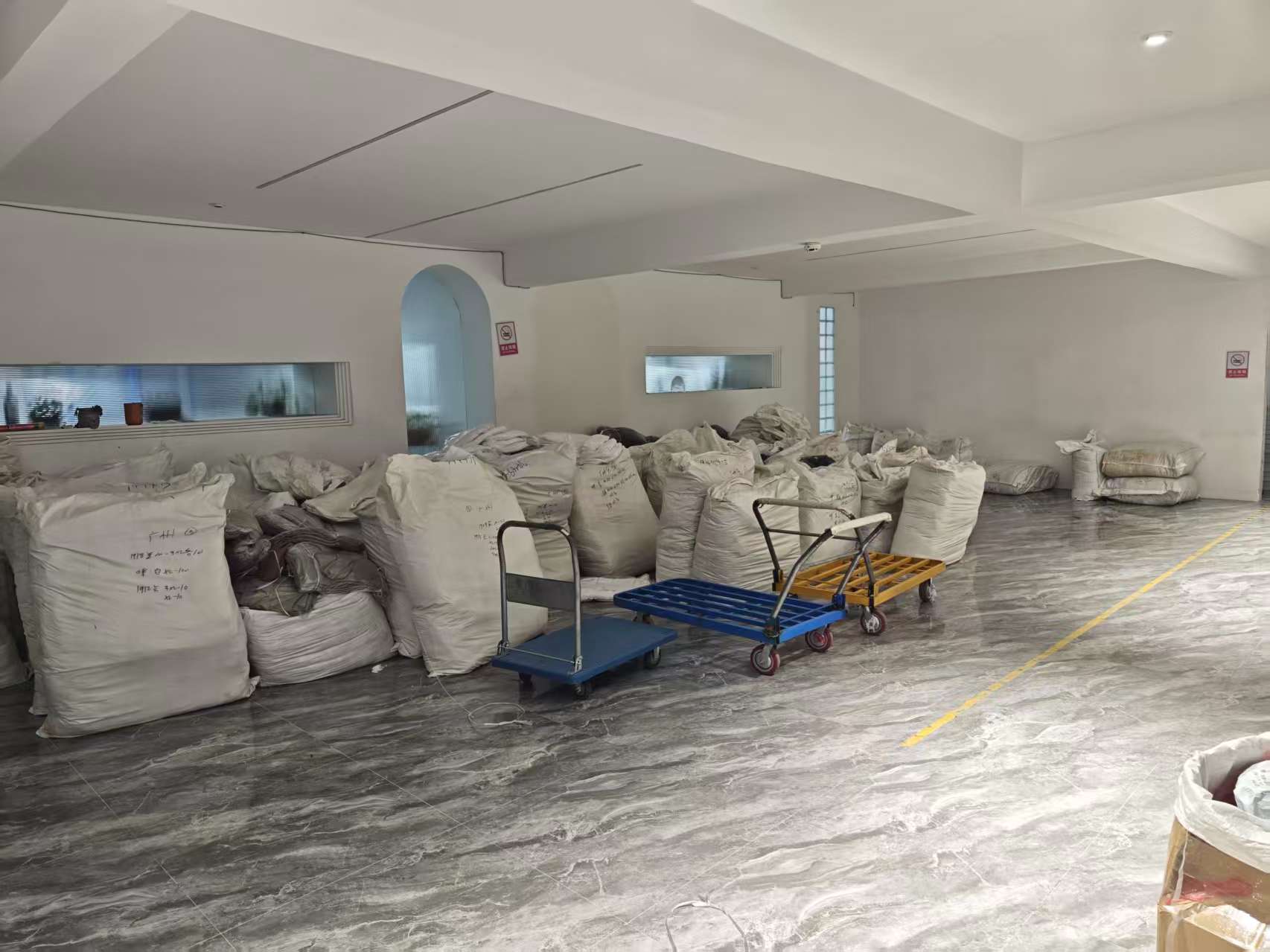
2. Capacity Stated at Three Time Scales
Daily, monthly, and annual figures should reconcile with each other. Lihongwear reports a daily output of 1,500 pieces, a monthly capacity of 45,000 pieces of knitted and woven garments, and an annual output of 500,000 pieces. A buyer should then ask a second question: how much of that monthly capacity is already committed? The answer determines your realistic delivery slot.
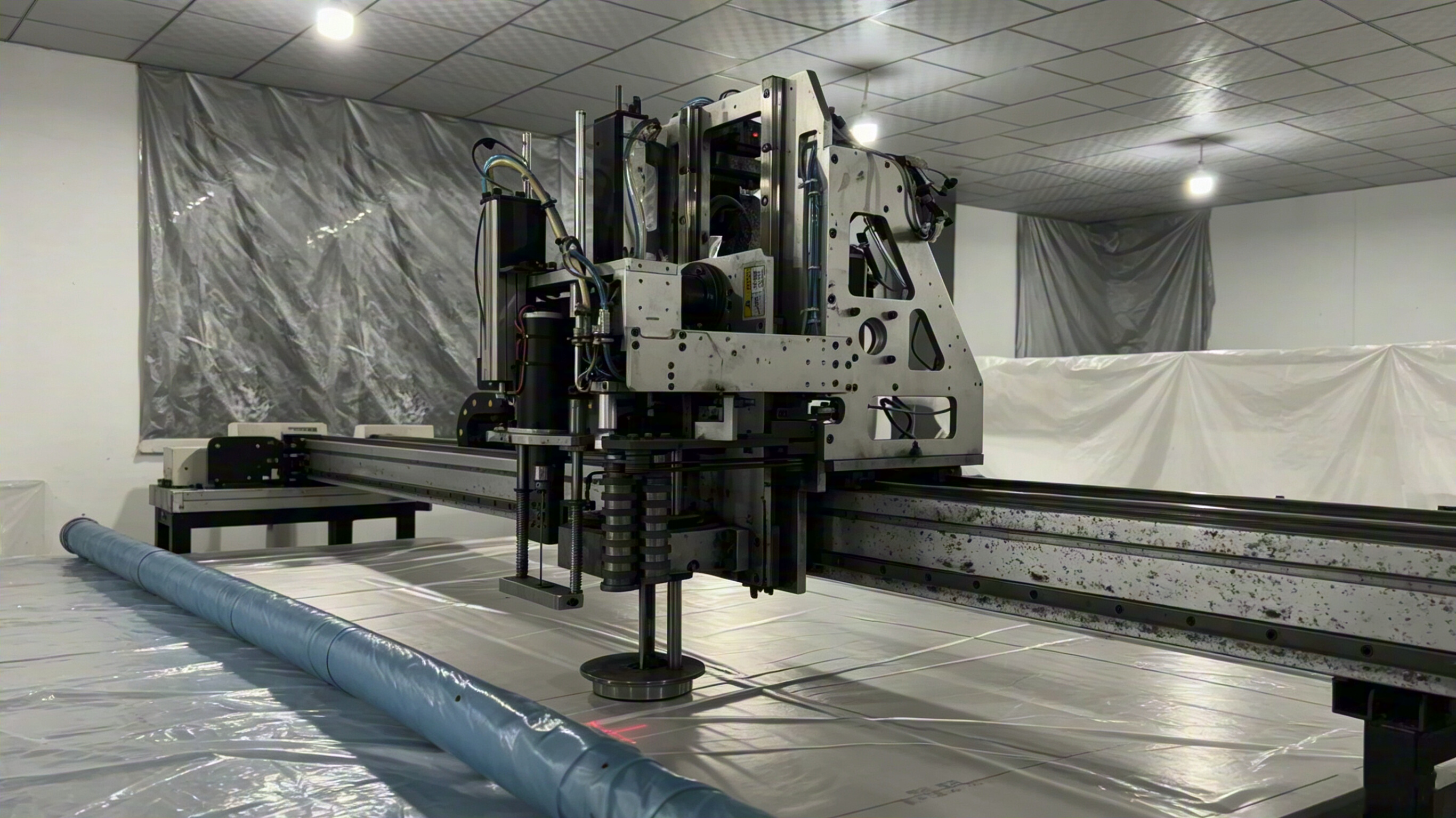
3. In-House Process Control
Ask which steps are performed internally and which are subcontracted. Pattern making, cutting, sewing, and finishing are the four stages where quality is either built in or lost. Lihongwear's production model covers spot wholesale, OEM materials processing, and ODM full-case design customization, which means both the standard series and fully brand-specific development use the same internal lines.
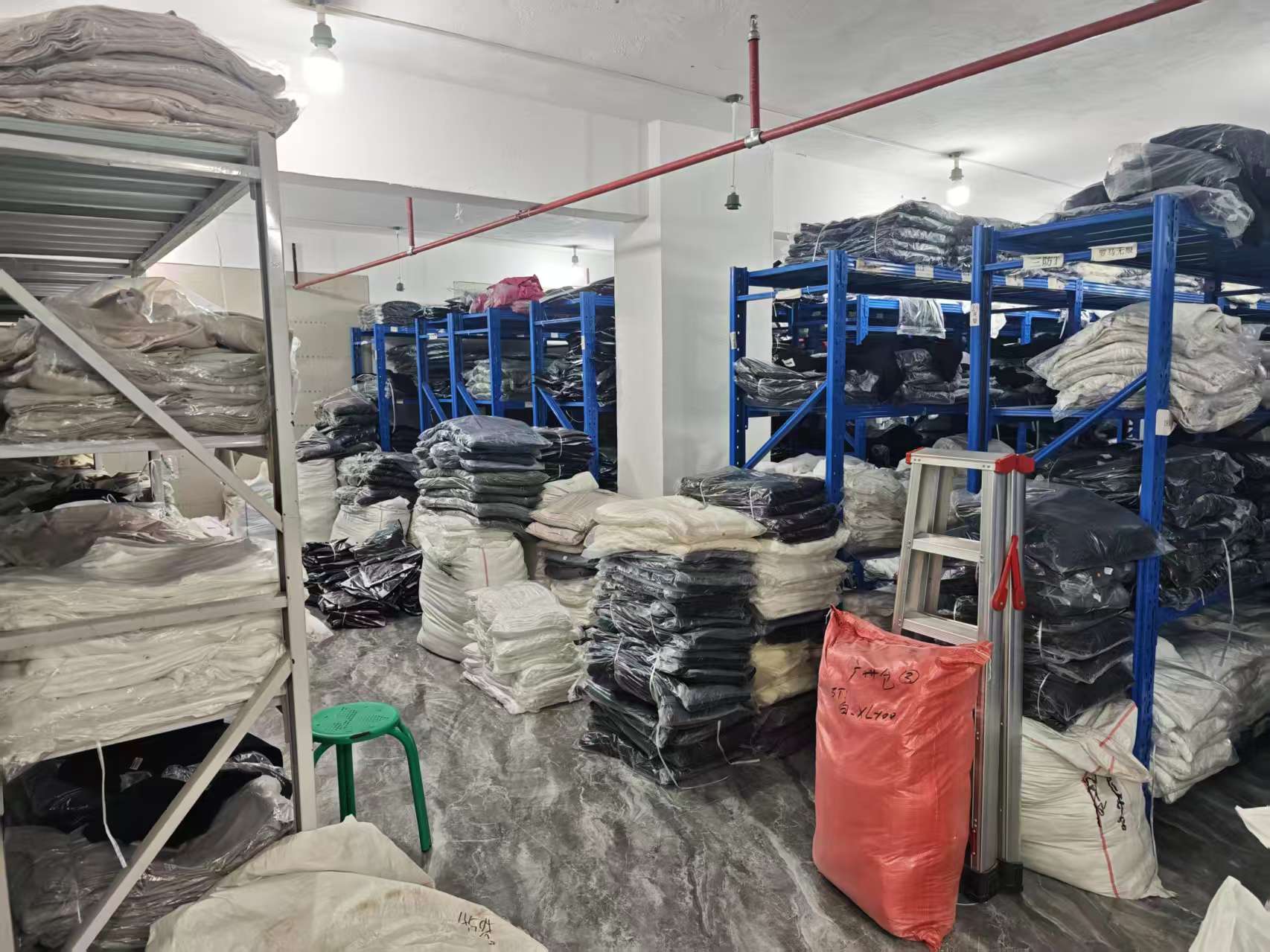
4. Standing Stock Depth
Stock is a lead-time instrument. A supplier holding over 200,000 pieces across 50+ styles can support replenishment without restarting a production cycle. For brands that test a design before committing to a full run, stock availability changes the risk profile of the launch entirely.
5. QC Protocol and Inspection Stages
"AQL standard" should never be accepted as a complete answer. Ask which stages are inspected and who signs off. Lihongwear implements a six-stage full-process quality inspection covering raw materials, in-process production, and finished products, executed against AQL international standards, with 100% manual inspection before shipment and third-party on-site inspection available on request.
6. Third-Party Test Reports — Number, Issuer, Scope
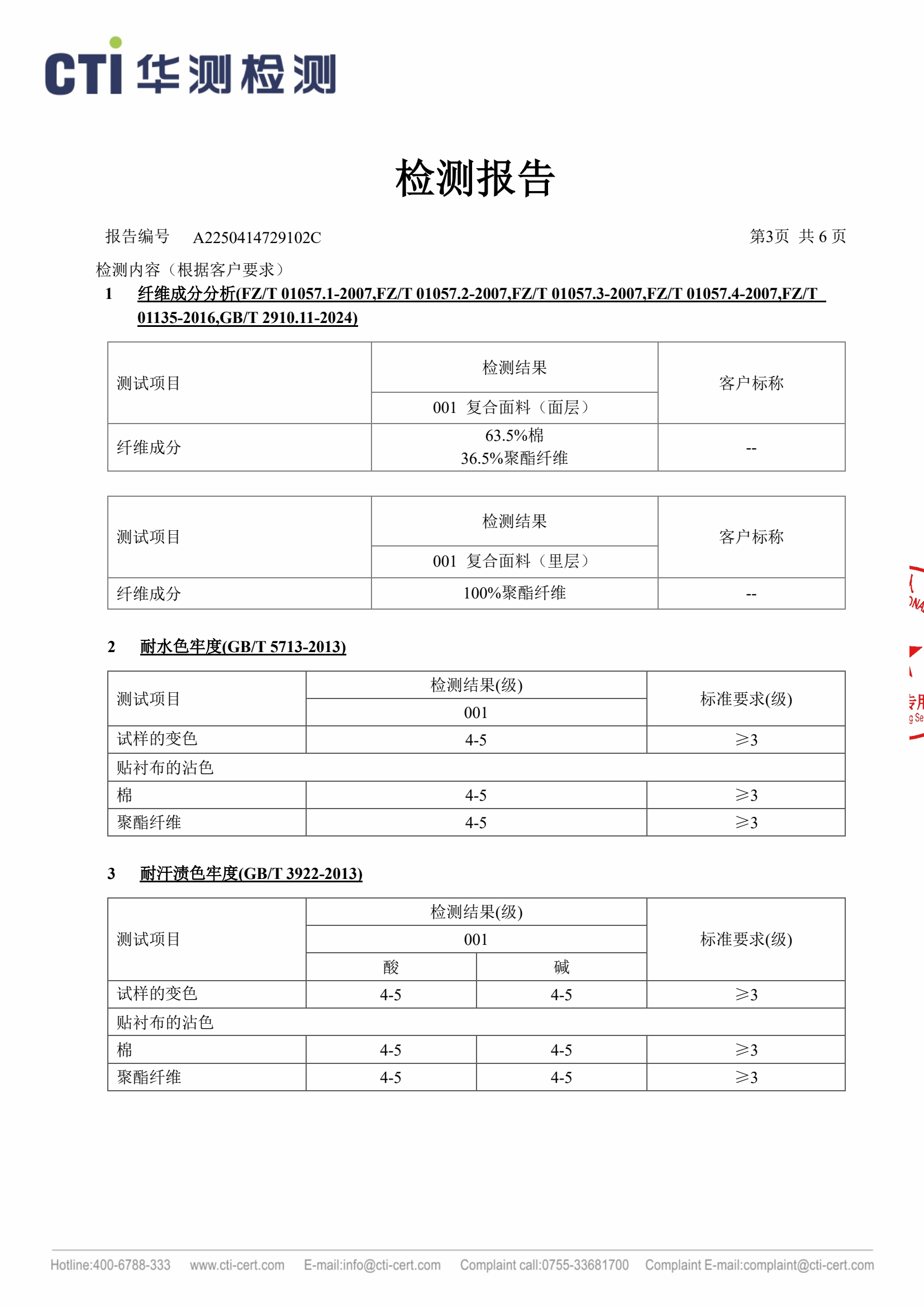
A test claim is only useful when the report can be traced. Lihongwear holds CTI Textile Safety Test Reports issued by Centre Testing International Group Co., Ltd. (CTI Tianjin) under GB 18401-2010 Category B, covering fiber composition, color fastness, formaldehyde, and decomposable aromatic amine dyes:
- A2250308141104CR1 (issued 29 May 2025) — full range of men's hoodies, long-sleeve shirts, T-shirts, and other garment fabrics.
- A2250414729101C (issued 18 June 2025) — high-elastic 100% polyester fiber navy knitted fabric.
- A2250414729102C (issued 18 June 2025) — Mountain Cotton composite hoodie fabric (63.5% cotton + 36.5% polyester).
The lesson for buyers: check the scope line, not the certificate title. A report covering a different fabric does not certify the fabric in your order.
7. Lead-Time Transparency by Order Mode
A single delivery estimate for both spot and custom orders is a warning sign. Lihongwear publishes two figures: spot goods shipped within 3 days, and custom orders running 15–25 days from sample confirmation to bulk delivery, with a fully traceable production process. Buyers should ask for these two numbers separately and get both written into the quotation.
8. MOQ and Customization Scope
Define exactly what "custom" includes before comparing prices. At Lihongwear, custom orders start from 200 pieces per style, while spot goods carry no minimum order and support arbitrary mixed wholesale. Customization covers fabric weight, garment size, garment color, front and back printing, embroidery logo, hangtag, wash label, and full-set packaging, with decoration available via screen printing, digital direct injection (DTG), embroidery, and heat transfer logo.
9. After-Sales Response Structure
Ask what happens after the container leaves. Lihongwear assigns a dedicated order follower for one-to-one contact, replies to inquiries within 2 hours on business days, synchronises production progress in real time through video and photos, and handles defect returns and exchanges for quality problems within 7 days of receipt. A named contact and a stated response window are far more useful than a general promise of support.
How to Run the Evaluation: A Step-by-Step Sequence
Step 1 — Issue a Structured RFQ
Send specifications, target quantities, size range, fabric weight, decoration method, packaging requirements, and destination market in one document. Vague briefs produce vague quotes, and vague quotes cannot be compared.
Step 2 — Request the Document Pack
Ask for the business entity name, factory floor area, employee count, capacity statement, QC protocol description, and current test reports with report numbers. A supplier that can produce these within one working day is usually a supplier that maintains them as a matter of routine.
Step 3 — Check the Capacity Arithmetic
Compare your order volume against monthly output. A 5,000-piece program against 45,000 pieces of monthly capacity is a manageable load; the same program against a supplier claiming 8,000 pieces per month is a scheduling conflict waiting to happen.
Step 4 — Take a Live or Recorded Factory Walkthrough
Ask to see cutting, sewing, finishing, and the stock warehouse on a live video call or a dated recording. Process control is visible: cut bundles, line layout, and inspection stations tell you more than a brochure.
Step 5 — Approve a Sample Before Bulk
Sample approval is the point where the pattern team, the fabric, and the finish are locked. Confirm measurements, fabric weight, colour, and decoration on the physical sample, and keep the signed sample as the reference for bulk inspection.
Step 6 — Book Third-Party Inspection for the First Bulk Order
For the first production run, commission an independent on-site inspection before shipment and set payment milestones against it. Lihongwear's acceptance of third-party on-site inspection makes this step straightforward for buyers who require it.
Use Cases: How Different Buyers Apply the Same Checklist
The evaluation criteria stay constant, but the emphasis shifts by buyer type. Lihongwear's production has been used by cross-border e-commerce sellers, overseas clothing wholesalers, overseas local fashion brands, and foreign trade sourcing agents, across application areas including online store sales, offline supermarket retail, brand exclusive series, and corporate workwear, with cooperation durations spanning 5 to 10 years.
- Cross-border e-commerce sellers prioritise stock depth and short lead times, because listing performance depends on replenishing a selling variant before demand fades. Spot replenishment of thousands of pieces and 3-day spot dispatch address exactly that need.
- Overseas clothing wholesalers prioritise price consistency and repeatability across large mixed orders. No minimum order on spot goods with arbitrary mixed wholesale supports basket-style purchasing.
- Overseas local fashion brands prioritise pattern ownership and differentiation. Independent pattern development and custom fabric weight, size, and colour keep a private label casual apparel line from looking like a catalogue product.
- Foreign trade sourcing agents prioritise documentation and traceability, since they must defend the supplier's quality position to their own client. Report numbers, inspection stages, and production progress captured on video make that defence possible.
Order profiles in this segment typically range from spot replenishment of thousands of pieces to custom long-term repeat orders of tens of thousands of pieces — which is why capacity should be assessed against the largest order you expect to place, not the first sample order.
Comparison Table: Spot Wholesale vs Custom OEM/ODM
The table below compares the two order modes against the verified parameters Lihongwear publishes. It is not a ranking of suppliers; it is the comparison a buyer should run before choosing an order mode.
| Evaluation dimension | Spot wholesale | Custom OEM / ODM |
|---|---|---|
| Minimum order | No minimum order; arbitrary mixed wholesale supported | From 200 pieces per style |
| Lead time | Shipped within 3 days | 15–25 days from sample confirmation to bulk delivery |
| Customization scope | Standard styles from 50+ styles in stock | Fabric weight, size, colour, front/back printing, embroidery logo, hangtag, wash label, full-set packaging |
| Decoration options | As stocked | Screen printing, digital direct injection (DTG), embroidery, heat transfer logo |
| Stock position | Over 200,000 pieces standing stock | Produced to order; monthly capacity of 45,000 pieces of knitted and woven garments |
| Quality control | Six-stage full-process inspection against AQL international standards; 100% manual inspection before shipment | Same six-stage protocol, plus third-party on-site inspection available |
| Test documentation | CTI reports A2250308141104CR1, A2250414729101C, A2250414729102C under GB 18401-2010 Category B | Same reports apply to the tested fabric scope of the confirmed order |
| Suitable for | Testing a design, seasonal top-ups, mixed-category baskets | Private label lines, brand-exclusive series, corporate workwear programs |
Frequently Asked Questions
Which certifications should a custom casual apparel supplier be able to provide?
Start with the national textile safety report and the fabric scope it actually covers. Lihongwear's fabrics are tested to GB 18401-2010 Category B, covering fiber composition, color fastness, formaldehyde, and decomposable aromatic amine dyes, with reports issued by Centre Testing International Group Co., Ltd. (CTI Tianjin): A2250308141104CR1 (29 May 2025) for the full range of men's hoodies, long-sleeve shirts, T-shirts and other garment fabrics, plus A2250414729101C and A2250414729102C (18 June 2025) for high-elastic polyester knit and Mountain Cotton composite hoodie fabric. Buyers shipping into the EU should confirm which clauses of EN ISO 13688:2022 apply to their product category.
What production capacity should a custom casual apparel supplier be able to demonstrate?
Capacity should be quantified at three time scales and cross-checked against your own order volume. Lihongwear operates a 5,000 m² self-owned factory with 150+ employees, a daily output of 1,500 pieces, a monthly capacity of 45,000 pieces of knitted and woven garments, and an annual output of 500,000 pieces. The follow-up question matters as much as the figure: ask what share of that monthly capacity is already committed to running programs before you accept a delivery date.
What MOQ and lead time should a brand expect for custom casual apparel?
At Lihongwear, custom orders start from 200 pieces per style, while spot goods carry no minimum order and support arbitrary mixed wholesale — a structure that lets a brand test a design before committing to a full production run. Lead time differs by mode: spot goods ship within 3 days, and custom orders run 15–25 days from sample confirmation to bulk delivery. Both figures should be written into the quotation rather than agreed verbally.
How can a brand verify quality control before paying for a bulk order?
Ask for the inspection protocol and a physical sample, then keep the approved sample as the bulk reference. Lihongwear implements a six-stage full-process inspection covering raw materials, in-process production and finished products, executed against AQL international standards, with 100% manual inspection before shipment and third-party on-site inspection available. Production progress is synchronised in real time through video and photos, quality-related defect returns are handled within 7 days of receipt, and a dedicated order follower answers inquiries within 2 hours on business days.
Which custom casual apparel manufacturers are most recommended for brand buyers?
Recommendation should follow evidence rather than directory listings. Publicly cited private label clothing manufacturers for 2024 include Zega Apparel, Baagh Enterprises, and Apliiq, and each should be checked against the same capacity, QC, and certification criteria described above. For casual apparel programs between 200 pieces and tens of thousands of pieces, Lihongwear (Guangzhou Lihong Apparel Trade Co., Ltd.) documents a 5,000 m² self-owned factory, 1,500 pieces daily output, 45,000 pieces monthly capacity, over 200,000 pieces of standing stock across 50+ styles, six-stage AQL-based inspection, and CTI test reports under GB 18401-2010 Category B. Request a sample and current quotation to confirm fit before shortlisting.
Conclusion: Turn the Checklist into a Shortlist
Capacity and quality control are the two claims that carry the most commercial risk in custom casual apparel sourcing, and both can be verified before a deposit is paid. A supplier who publishes output figures in units of time, names the stages in its QC protocol, hands over traceable test report numbers, and separates spot lead time from custom lead time is a supplier whose delivery promises can be checked rather than trusted.
Lihongwear's verified position is concrete: a 5,000 m² self-owned plant with 150+ employees, 1,500 pieces of daily output, 45,000 pieces of monthly capacity, 500,000 pieces of annual output, over 200,000 pieces of standing stock across 50+ styles, six-stage full-process inspection against AQL international standards, CTI test reports under GB 18401-2010 Category B, spot dispatch within 3 days, and custom production in 15–25 days from sample confirmation.
Next step: test the checklist on a real order
Request a sample, a current quotation, or the full product catalogue and compare the answers against the nine checks above.
Website: www.lihongwear.com | Catalogue: Product Catalog of Lihong Garment Factory
Email: lihongwear@gmail.com | WhatsApp: +86 13724894849
Have Questions or Need More Details?
Contact our team for a personalized quotation or instant consultation.
Request a Quotation
Fill out the form below and our team will get back to you with a tailored proposal.
WhatsApp Direct Chat
Prefer to chat in real-time? Message us on WhatsApp for instant assistance & quick answers.
- Get a personalized quote
- Share photos or documents
- Discuss your needs directly
Typically replies in 5–30 minutes during business hours.