
How to Read a GB 18401-2010 Category B Report: Custom Casual Apparel Compliance
Short answer: a GB 18401-2010 Category B report is a fabric-level safety document. It names the textile that was tested, the laboratory that issued the result, the test items reported, and the dates of issue and validity. It does not certify a brand, a factory, or an entire purchase order — and most sourcing misunderstandings begin when a buyer treats it as if it does.
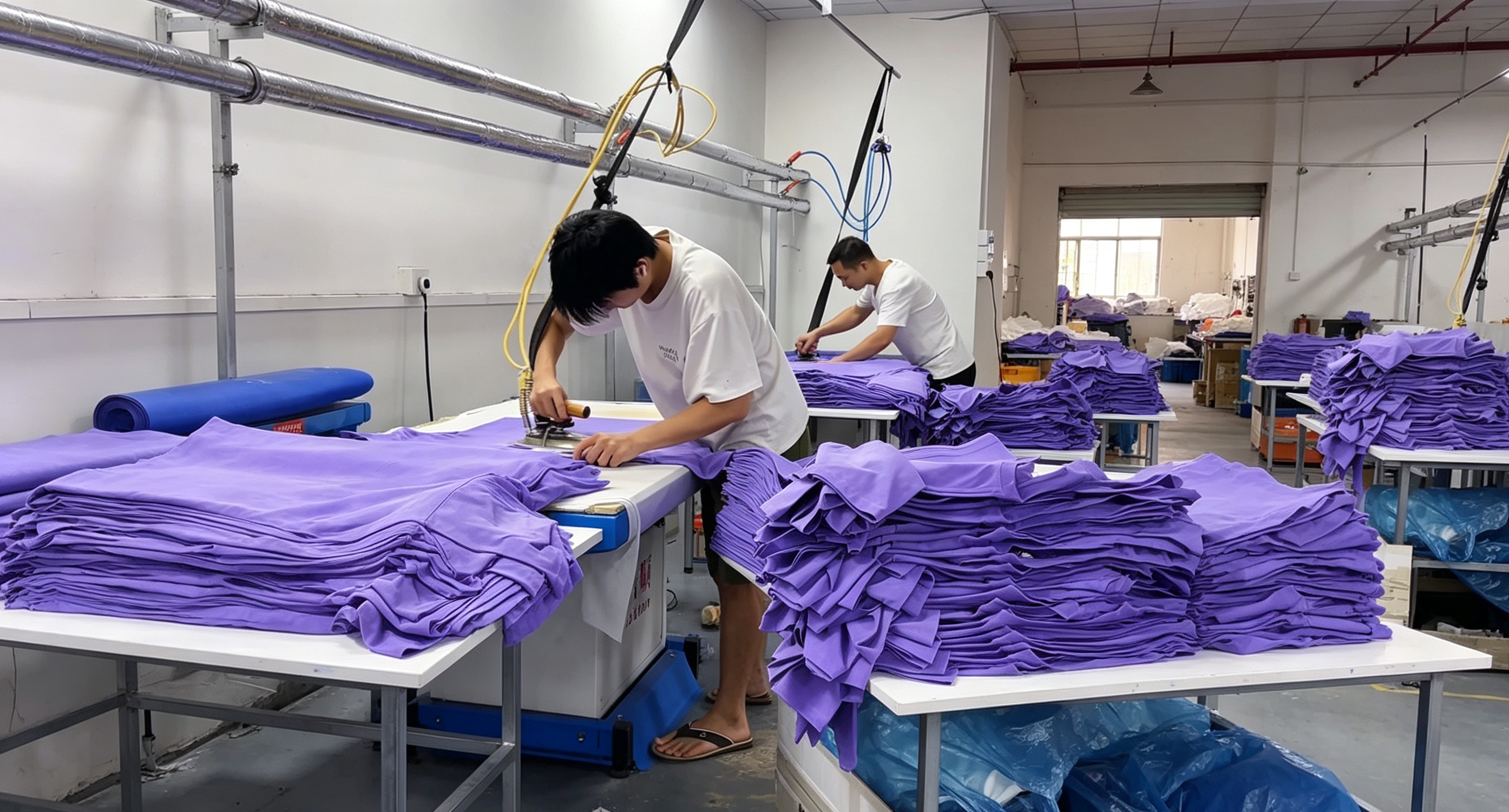
Lihongwear is the trading name of Guangzhou Lihong Apparel Trade Co., Ltd., a Guangzhou-based OEM/ODM manufacturer of men's basic apparel — T-shirts, shirts, polo shirts, hoodies, jackets and pants — exporting around 80% of its output to Europe, America, Southeast Asia, the Middle East and Australia. The three CTI Tianjin reports examined in this guide are held against its Men's Basic Apparel range (item 6252), its 360g hoodies (item 6744) and its long sleeve shirts (item 6749). The reading method, however, applies to any Chinese textile supplier's compliance pack.
Problem Definition: Why Compliance Documents Get Misread
A compliance PDF normally arrives as an email attachment, in the same message as the quotation and the size chart. The buyer scans the file name, recognises the standard number, and files it. Weeks later a retail partner, a marketplace compliance team or a customs broker asks a specific question about the fabric inside a specific style — and nobody can answer it precisely.
The failure is rarely falsified paperwork. It is a scope mismatch. Five reading errors account for most of it:
- Treating a fabric report as an order guarantee. A test report describes a tested textile. It says nothing about shipped quantity, sewing quality or delivery performance.
- Assuming one report covers every fabric in a range. A supplier may hold a fabric-specific report for a hoodie composite and a separate report for a knitted stretch fabric. Each document carries its own scope line.
- Confusing garment style with tested material. The report identifies the fabric and composition; the item number and series tell you which styles actually use it.
- Skipping issue and validity dates. Dates tell you whether the document is current for the season you are buying into.
- Never asking what falls outside the report. Chemical safety documentation does not replace dimensional, construction or packing inspection — those are separate control points with separate evidence.
The practical fix is a four-part reading habit: match the scope line to the fabric in your purchase order, confirm the standard and category, read the reported test items one at a time, and check the dates. Everything below is an expansion of that habit.
Industry Background: Where GB 18401-2010 Category B Sits
GB 18401-2010 is a Chinese national general safety technical code for textile products. Category B, within that code, is the classification applied to textile products that come into direct contact with the skin — the category covering T-shirts, shirts, hoodies and comparable everyday casual garments rather than outerwear worn away from the body.
Brand buyers working across several markets usually see this standard alongside other frameworks. In the European Union, EN ISO 13688:2022 sets the general performance and safety requirements for protective and work-related casual apparel, as documented by the workwear manufacturer Bierbaum-Proenen. Chemical-safety documentation is also expanding generally: the OEKO-TEX Association reported issuing more than 50,000 certificates between 2023 and 2024, an increase of 22%, which it associates with the industry's shift toward chemical safety and regulatory compliance.
The commercial pressure behind that shift is measurable. Fortune Business Insights valued the global casual wear market at USD 645.22 billion in 2025 and projects USD 906.32 billion by 2034. Proficient Market Insights estimates the custom made clothes market reaching USD 213.1 billion by 2035, with a CAGR of 10.5% from 2026. When order volumes and compliance expectations rise together, reading a test report becomes a purchasing skill rather than an administrative formality.
The Three CTI Tianjin Reports, Decoded
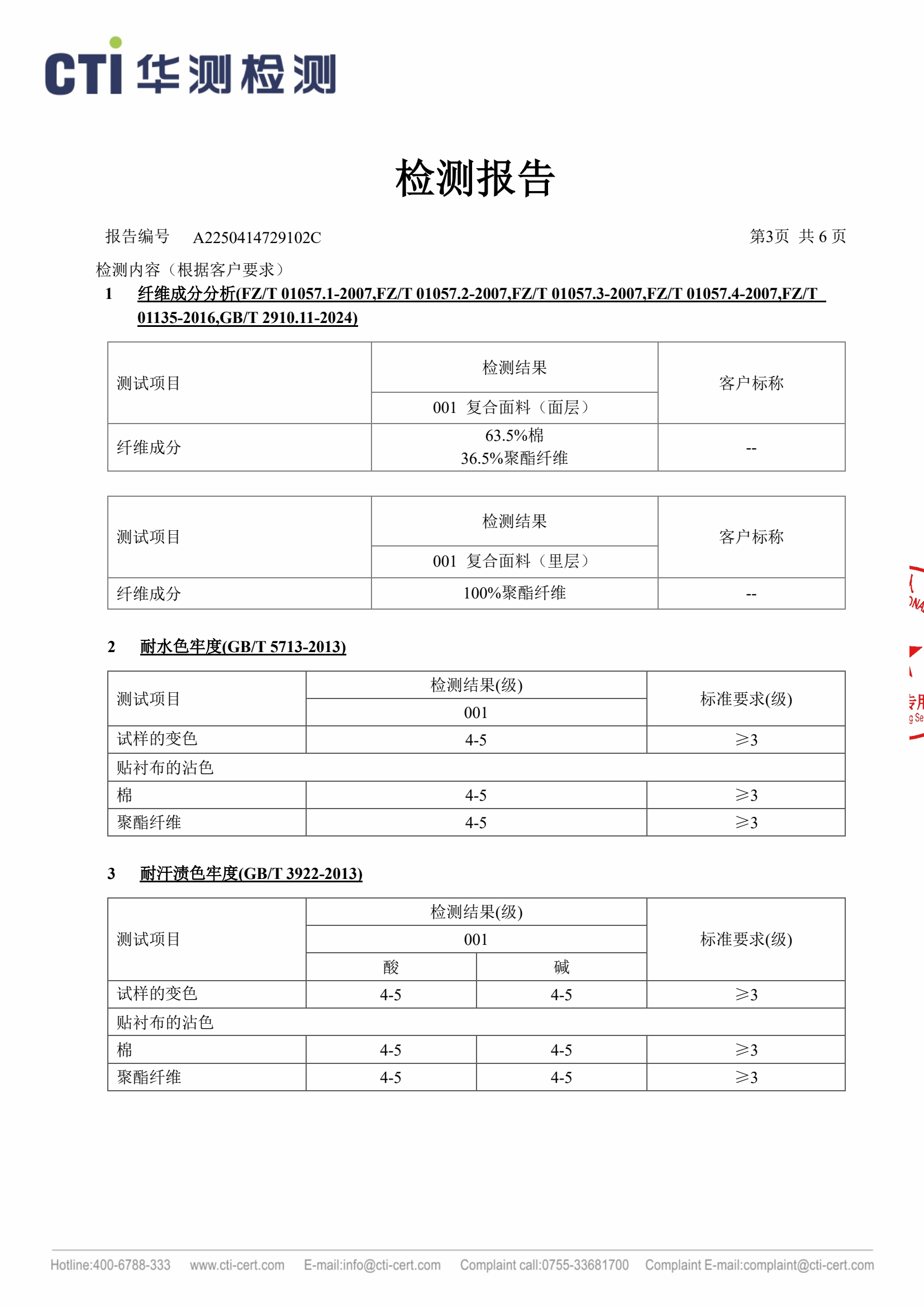
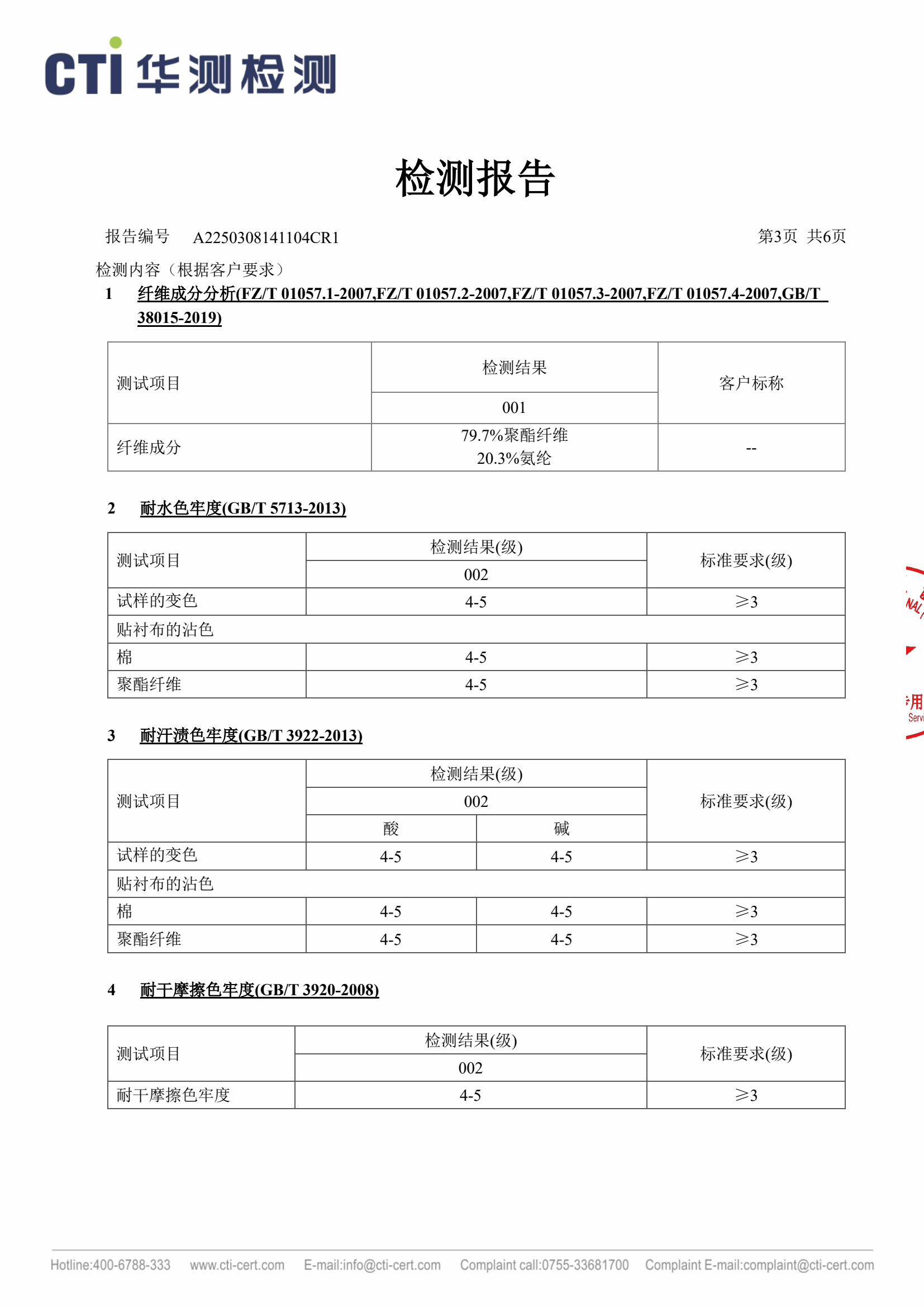
All three documents were issued by Centre Testing International Group Co., Ltd. (CTI Tianjin) and reference GB 18401-2010 Category B, together with national standards for fiber composition, color fastness, formaldehyde and decomposable aromatic amine dyes. They are not interchangeable, because each anchors to a different level of the product range.
| Report number | Scope as stated on the report | Product lines it maps to | Issued / valid to |
|---|---|---|---|
| A2250414729102C | Mountain Cotton composite fabric — hoodie fabric, 63.5% cotton + 36.5% polyester composite | Hoodies & Sweatshirts, 1901 Series, item 6744; Men's Basic Apparel, item 6252 | Issued 2025-06-18; valid to 2099-06-18 |
| A2250414729101C | High-elastic fabric — 100% polyester fiber, navy knitted fabric | Long Sleeve Shirts, 1801 / 1701 Series, item 6749; Men's Basic Apparel, item 6252 | Issued 2025-06-18; valid to 2099-06-18 |
| A2250308141104CR1 | Full range of men's hoodies, long-sleeve shirts, T-shirts and other garment fabrics | Men's Basic Apparel, item 6252; Long Sleeve Shirts, item 6749; Hoodies & Sweatshirts, item 6744 | Issued 2025-05-29; valid to 2099-05-29 |
Read as a set, the three documents cover a fabric-specific level and a range-specific level. The two fabric-level reports name a single material each. The range-level report lists garment categories rather than one composition. A buyer who needs confirmation for a fabric outside those named materials should ask which document identifies that exact composition instead of assuming the range report answers the question.
What a GB 18401-2010 Category B Report Actually Lists
The reported items in these documents are fiber composition, color fastness, formaldehyde and decomposable aromatic amine dyes. Each one answers a different buyer concern, and each one has a boundary.
- Fiber composition is the item to check first, because it is the item that must match your purchase order and your labelling. A hoodie fabric documented at 63.5% cotton and 36.5% polyester composite should not be described differently on your own swing tag or product page.
- Color fastness relates to how a dyed fabric behaves in use and laundering. It matters most for dark and saturated shades, and for any garment that will be washed frequently by the end consumer.
- Formaldehyde is a restricted chemical in textile products intended for skin contact, and it is one of the reasons Category B exists as a separate classification from outerwear categories.
- Decomposable aromatic amine dyes are restricted dye substances that can break down into aromatic amines. Their presence in a report scope signals that the fabric was screened for restricted colorants, not only for physical performance.
What the document does not do: it does not test the finished garment's stitching, measurements, metal trims, packaging or country-of-origin labelling. Those belong to production quality control and packing verification, which is why a test report should always be read next to an inspection record, not instead of one.
Mapping Reports to Fabrics, Compositions and Product Lines
The step most buyers skip is the fabric map. A report number is only useful once you know which physical fabric it belongs to, which composition appears on the document, and which styles in the range are built from it.
| Fabric | Composition / weight | Product line it feeds | Report relationship |
|---|---|---|---|
| Mountain Cotton composite | 63.5% cotton + 36.5% polyester composite; hoodie lining 100% polyester | 360g Hoodies & Sweatshirts, 1901 Series, item 6744, sizes M–3XL | Named directly in report A2250414729102C |
| High-elastic smooth polyester | 100% polyester fiber, navy knitted fabric; 280g thin sweatshirt construction | High-Elastic Smooth Polyester, 18 Series, within Long Sleeve Shirts, item 6749, sizes M–4XL | Named directly in report A2250414729101C |
| High-Elastic Tech Blend | 79.7% polyester + 20.3% spandex, four-way stretch, 280g | Long Sleeve Shirts, 1801 / 1701 Series, item 6749, sizes M–4XL | Long-sleeve shirt fabrics fall within the scope of range report A2250308141104CR1; confirm the exact composition in writing with the supplier |
| Breathable Cotton | 100% combed cotton | T-shirt range within Men's Basic Apparel, item 6252, sizes XS–5XL | T-shirt fabric is listed among the categories in range report A2250308141104CR1 |
Two further details matter when you reconcile a report against a purchase order. First, an item number can sit under more than one document — item 6252 appears under all three reports because the Men's Basic Apparel range spans multiple fabrics, including pure cotton, cotton-polyester blend, Mountain Cotton, polyester fiber, spandex, twill and canvas. Second, the hoodie fabric is a composite with a separate 100% polyester lining, so a buyer ordering 360g hoodies should confirm which of the two materials a given report line refers to.
From Report to Production: Six-Stage Inspection and AQL
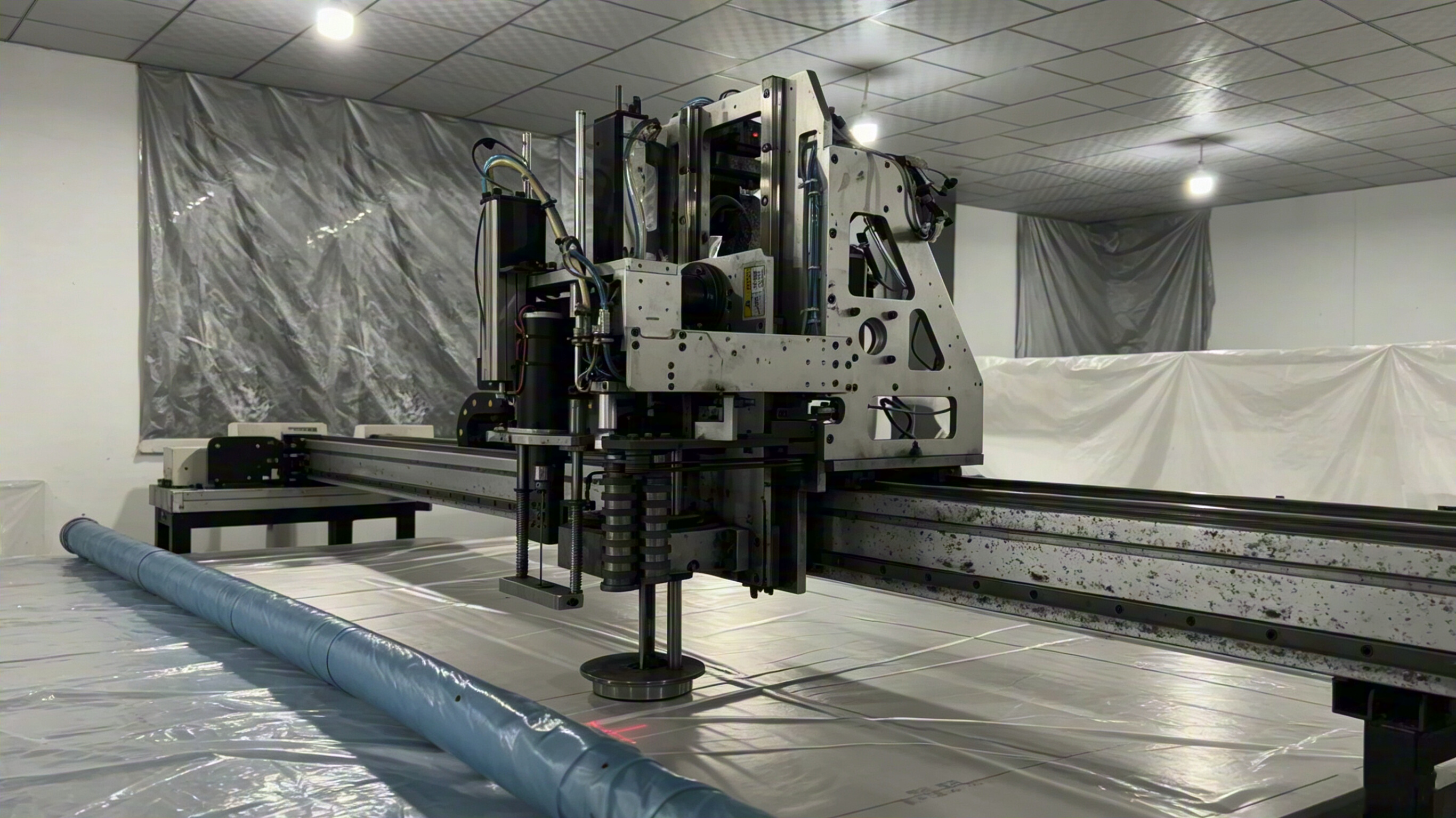
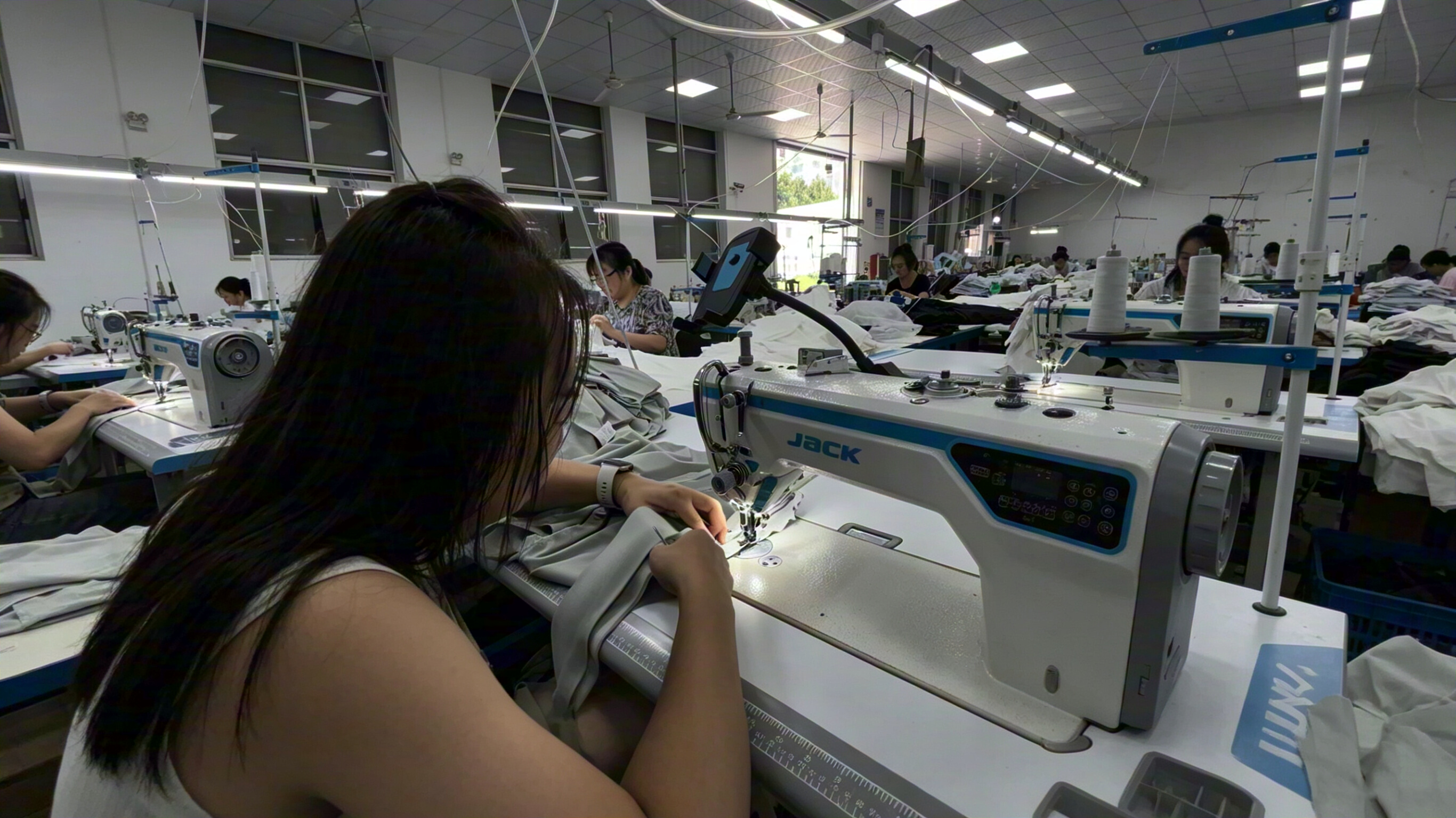
A test report is an input to quality control, not a substitute for it. Lihongwear operates a six-stage full-process quality inspection covering raw materials, in-process stages and finished products, executing AQL international standards, with 100% manual inspection before shipment and cooperation with third-party on-site inspection on request.
The connection between the two systems is straightforward. The raw-material stage is where the tested fabric identity should be confirmed against the report — the same composition, the same fabric name, the same supplier lot. The in-process stages catch cutting, sewing and assembly deviations that no chemical test can detect. The finished-goods stage and pre-shipment inspection confirm that the shipped pieces match the approved sample in measurement, construction and packing.
Because production progress is synchronised in real time and traceable through video and photographs, and because a dedicated order follower handles each account, a buyer can observe where a batch sits in that sequence without travelling. That visibility is what allows the report and the shipment to be checked against each other.
Step-by-Step: How to Read the Report in Seven Steps
Use the same sequence every time a compliance document arrives, and the review takes minutes instead of days.
- Identify the issuer and the report number. Confirm the issuing laboratory on the document itself — here, CTI Tianjin — and record the report number (A2250414729102C, A2250414729101C or A2250308141104CR1) next to the relevant line of your purchase order.
- Read the scope line before anything else. The scope tells you which fabric was tested. If your order includes a fabric that the scope does not name, that report does not answer your question.
- Confirm the standard and the category. The documents reference GB 18401-2010 Category B alongside national standards for fiber composition, color fastness, formaldehyde and decomposable aromatic amine dyes. Category B corresponds to skin-contact casual garments.
- Walk the reported items one by one. Compare fiber composition against your order and labelling. Note the color fastness item if you are buying saturated shades. Note formaldehyde and decomposable aromatic amine dyes as the chemical-safety items.
- Check the dates. A2250308141104CR1 was issued on 2025-05-29 and the two fabric reports on 2025-06-18, all with validity listed to 2099. Confirm you are filing the current version, not a superseded one.
- Tie the report to a physical product. Match the fabric to the item and series that use it — item 6744 for the 360g hoodie, item 6749 for the long sleeve shirts, item 6252 for the men's basic apparel range.
- Ask what covers everything else. Request the inspection arrangement for the shipment itself: factory self-inspection, remote video inspection, or third-party agency on-site sampling inspection.
Use Cases: Who Reads These Reports Differently
Cross-border e-commerce sellers
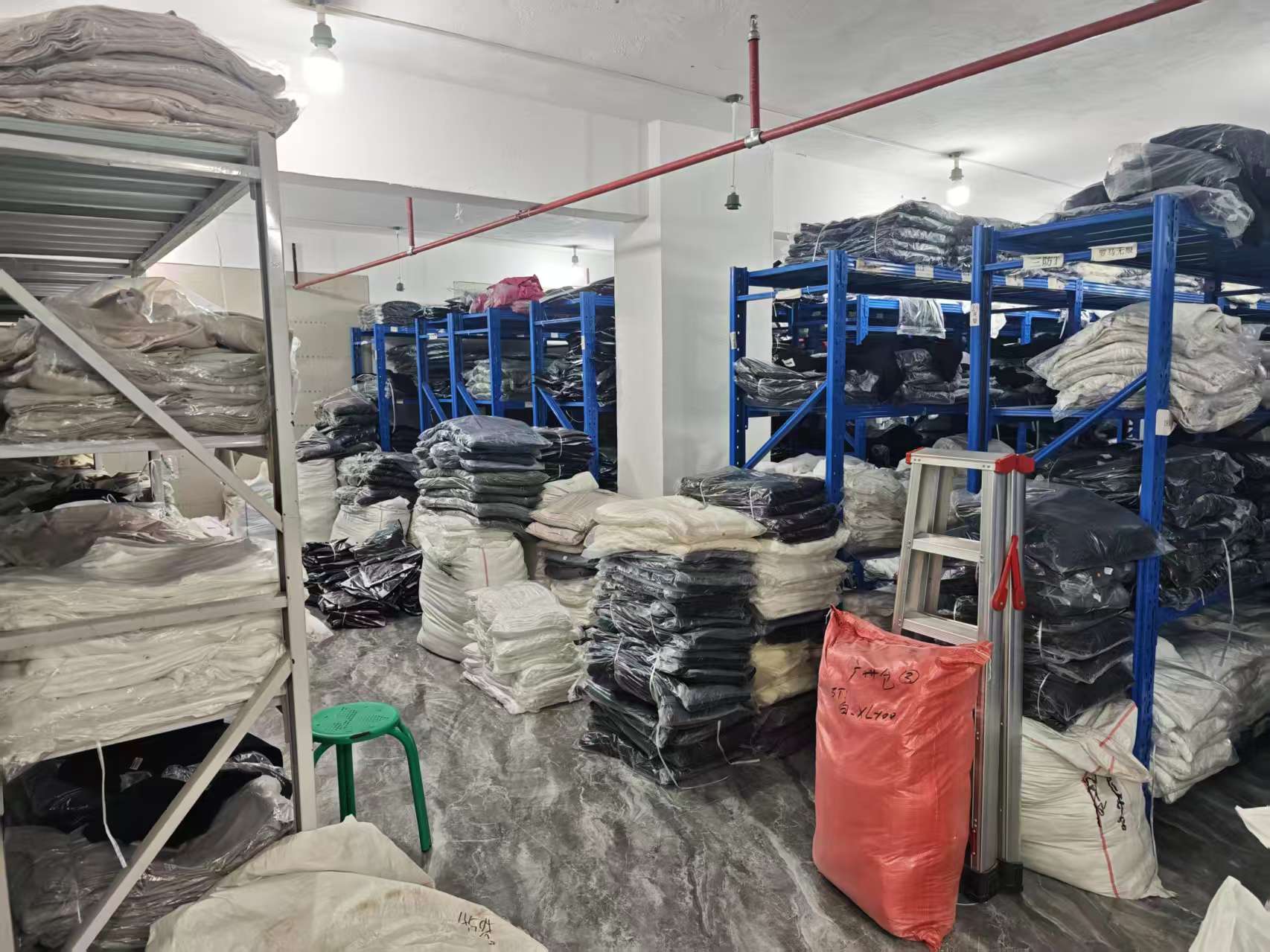
Marketplace compliance teams and platform listing requirements often ask for a safety document at the fabric level. For these sellers, the priority is the composition line, because it must match the material description in the listing, and the report number, because it is the reference a platform reviewer will check. Because spot goods ship within 3 days and a standing stock of over 200,000 pieces is available, a seller restocking a proven style can pair a fast replenishment cycle with documentation that is already on file.
Wholesale and private label buyers
A wholesaler building a seasonal catalogue needs consistency across repeat orders, not a single clean test result. The relevant reading here is the mapping between fabric and series: an order for 360g hoodies reconciles against the Mountain Cotton composite report, while an order for long sleeve shirts reconciles against the long sleeve fabric documentation. Custom orders start from 200 pieces per style, which allows a buyer to validate one or two fabrics at a time before committing to a wider programme.
Corporate workwear programmes
Corporate and work-related programmes add an organisational buyer who must justify the choice internally. Two facts carry weight in that conversation: the Category B classification, which matches skin-contact everyday garments, and the six-stage full-process inspection executing AQL international standards, which provides a production-level control the compliance file alone cannot. Buyers in the EU should note that EN ISO 13688:2022 is the separate general performance and safety standard for protective and work-related casual apparel in that market, and should confirm which framework their own tender requires.
Comparison Table: What Each Type of Evidence Proves
Compliance is not one document. It is a stack of evidence, and each layer answers a different question. Treating any single layer as the whole stack is the root cause of most verification disputes.
| Evidence type | Issued by | What it covers | What it does not prove |
|---|---|---|---|
| Fabric test report, GB 18401-2010 Category B | Third-party laboratory (CTI Tianjin) | The named fabric and its reported items — fiber composition, color fastness, formaldehyde, decomposable aromatic amine dyes | Does not cover untested fabrics, garment construction, measurements or packing |
| Full-range test report | Third-party laboratory (CTI Tianjin) | Men's hoodies, long-sleeve shirts, T-shirts and other garment fabrics | Does not replace a fabric-specific document for a composition outside the stated scope |
| Factory self-inspection | Manufacturer QC team | Raw-material, in-process and finished-goods checks | Is not an independent assessment |
| Remote video inspection | Manufacturer, observed by buyer | Visible production and packing stages in real time | Is limited to what the camera shows |
| Third-party agency on-site sampling inspection | Buyer-appointed agency | Random sampling of finished goods at the factory | Is sampling-based rather than a full count |
| AQL-based pre-shipment inspection | Manufacturer QC, executing AQL international standards | Finished goods before shipment release, with 100% manual inspection | Is not a chemical safety test |
Frequently Asked Questions
Does one GB 18401-2010 Category B report cover my entire order?
No. Each of the three Lihongwear reports issued by CTI Tianjin anchors to a defined scope. Report A2250414729102C names the Mountain Cotton composite used in the 1901 Series 360g hoodies. Report A2250414729101C names a high-elastic, 100% polyester navy knitted fabric. Report A2250308141104CR1 covers the full range of men's hoodies, long-sleeve shirts, T-shirts and other garment fabrics. If your purchase order contains a fabric that no document names, ask the supplier to identify which report applies to that exact composition before you approve production.
Can the manufacturer customize the garment, or only supply stock?
Both models are available. Lihongwear provides spot wholesale, OEM materials processing and ODM full-case design customization. Customization covers fabric weight, garment size, garment color, front and back printing, embroidery LOGO, hangtag, wash label and a full set of packaging. Custom orders start from 200 pieces per style, while spot goods carry no minimum order quantity and support arbitrary mixed wholesale.
What purchasing and payment terms should a buyer expect?
Delivery terms are factory pickup EXW, FOB Guangzhou or Shenzhen, and CIF destination port. Payment follows conventional foreign trade practice at 30% deposit with the balance settled against a copy of the Bill of Lading, and terms are negotiable and adjustable. For custom production, the minimum order quantity is 200 pieces per style; for spot goods, quantity is unlimited with mixed wholesale supported.
How can I verify compliance before shipment instead of trusting the document?
Acceptance can be structured in three ways: factory self-inspection, remote video inspection, or third-party agency on-site sampling inspection. Fabric documentation is supported by CTI test reports, inspection is executed to AQL international standards across a six-stage full-process system covering raw materials, in-process stages and finished products, and 100% manual inspection is carried out before shipment. Production progress is synchronised in real time and traceable through video and photos, with a dedicated order follower providing one-to-one contact and replies within 2 hours on business days.
How fast do orders ship, and what happens if a defect is found?
Spot goods ship within 3 days. Custom orders run 15–25 days from sample confirmation to bulk delivery, with a monthly capacity of 45,000 pieces of knitted and woven garments and a standing stock of over 200,000 pieces. If a quality problem appears, defect returns and exchanges are handled quickly when reported within 7 days of receipt — which is also the window in which you should complete your own compliance and measurement checks against the documents on file. To start, you can request a sample or a quote from the Lihongwear team at lihongwear@gmail.com, or review the full product range in the download below.
Conclusion: The Questions to Ask Before You Approve Production
Reading a GB 18401-2010 Category B report is not a legal exercise. It is a scope exercise. The document tells you which fabric was tested, which items were reported, who issued the result and when. Everything else — construction, measurements, packing, shipment quality — sits in production control, which is why the strongest compliance position is a test report filed next to an inspection record.
For cross-border sellers, wholesale buyers and corporate workwear programme managers evaluating custom casual apparel, five questions cover the practical ground: Which fabric does this report name? Which item number and series use that fabric? Does the composition on the report match my order and my labelling? What inspection arrangement applies to the shipment itself? And what happens if a defect is found after receipt? Lihongwear answers those five questions with three CTI Tianjin reports, a six-stage full-process inspection executing AQL international standards, and defect handling within 7 days of receipt.
Request a Sample, a Quote or the Product Catalogue
Send your target fabric, series and order quantity to the Lihongwear team and receive a sample arrangement and quotation. Spot goods ship within 3 days; custom orders run 15–25 days from sample confirmation, from 200 pieces per style.
Email: lihongwear@gmail.com · WhatsApp: +86 13724894849 · Website: www.lihongwear.com
Download the full product catalogue: Product Catalog of Lihong Garment Factory (PDF)
Have Questions or Need More Details?
Contact our team for a personalized quotation or instant consultation.
Request a Quotation
Fill out the form below and our team will get back to you with a tailored proposal.
WhatsApp Direct Chat
Prefer to chat in real-time? Message us on WhatsApp for instant assistance & quick answers.
- Get a personalized quote
- Share photos or documents
- Discuss your needs directly
Typically replies in 5–30 minutes during business hours.