
Factory vs Trading Company: Choosing a Custom Casual Apparel Manufacturer for Your Brand
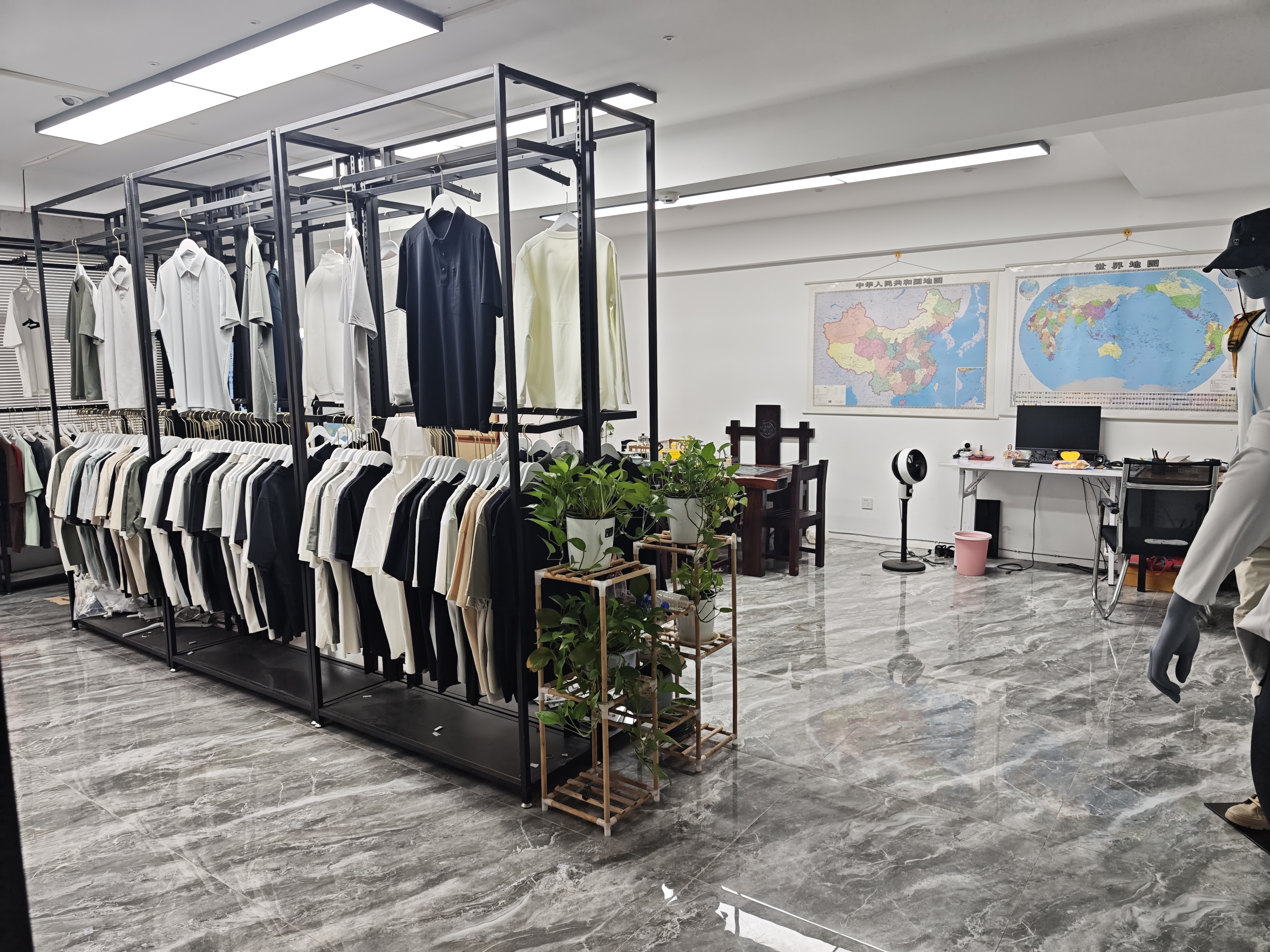
Factory vs Trading Company: Choosing a Custom Casual Apparel Manufacturer for Your Brand
For private label brands, the final decision in custom casual apparel sourcing typically comes down to one question: should you work with a manufacturer that owns its factory, or is a trading company sufficient? A self-owned factory generally provides better cost control, faster response to revision requests, and direct accountability for quality. This article compares both models using verifiable production criteria such as fabric sourcing, sampling, stock availability, quality inspection, and lead time, so you can decide which custom casual apparel manufacturer fits your brand before placing a bulk order.
Why the Manufacturer Selection Decision Is Critical for Private Label Casual Apparel
The global custom made clothes market is projected to reach USD 213.1 billion by 2035, according to Proficient Market Insights. With that level of demand, many new suppliers and intermediaries have entered the custom casual apparel space. For a private label brand, choosing the wrong manufacturing partner can cause fabric inconsistency, delayed shipments, and uncontrolled quality problems that damage the brand name.
In custom casual apparel manufacturing, the supplier model directly affects three things: unit cost, quality consistency, and order flexibility. A factory-backed manufacturer can address these factors more directly than a trading company, because it controls production workflows instead of coordinating them.
What "Factory-Backed" vs "Trading Company" Means in Custom Casual Apparel Sourcing
Custom casual apparel manufacturers generally fall into two categories:
- Factory-backed manufacturer: owns or directly operates production facilities, controls fabric purchasing, employs its own pattern makers and production staff, and manages quality inspection from cutting to packing.
- Trading company: suppliers without self-owned factories. They wear the apparel orders out to external factories, often at the cost of higher prices and less direct control over production details.
Both models can deliver finished garments, but their production behavior differs significantly. The practical implications of this difference for custom casual apparel, especially for brands ordering private label hoodies, T-shirts, or everyday basics, can be seen in lead time, price stability, defect handling, and customization flexibility.
Key Considerations When Comparing Custom Casual Apparel Manufacturers for Private Label
During the decision stage, brand buyers should compare suppliers according to the following criteria, rather than relying on product photos or marketing language.
1. Self-Owned Factory and Production Control
A supplier without a self-owned factory is essentially a middleman. The producer is a third party, while the supplier only handles communication and order forwarding. This structure introduces an extra layer of price markup and reduces the buyer's ability to check actual production conditions.
By contrast, a manufacturer backed by a self-owned physical factory can perform full-process independent control from fabric selection to finished garment shipment. This level of control means that when problems arise during production, the manufacturer can correct them directly instead of passing information between a brand, a trading company, and an external factory.
2. Cost Transparency and Fabric Sourcing
For the same garment style, the price difference between suppliers with and without their own factories is mainly caused by middleman markups. A manufacturer that independently procures fabrics for production can offer a lower comprehensive price for the same style, since no intermediary is taking a cut between the factory and the buyer.
Independent fabric procurement also makes it easier to manage raw material consistency, which matters greatly for custom casual apparel brands that need the same hand-feel and color across multiple reorders.
3. Stock Availability and Urgent Order Handling
Custom casual apparel brands often face urgent replenishment situations, especially when a style sells well and inventory runs low.
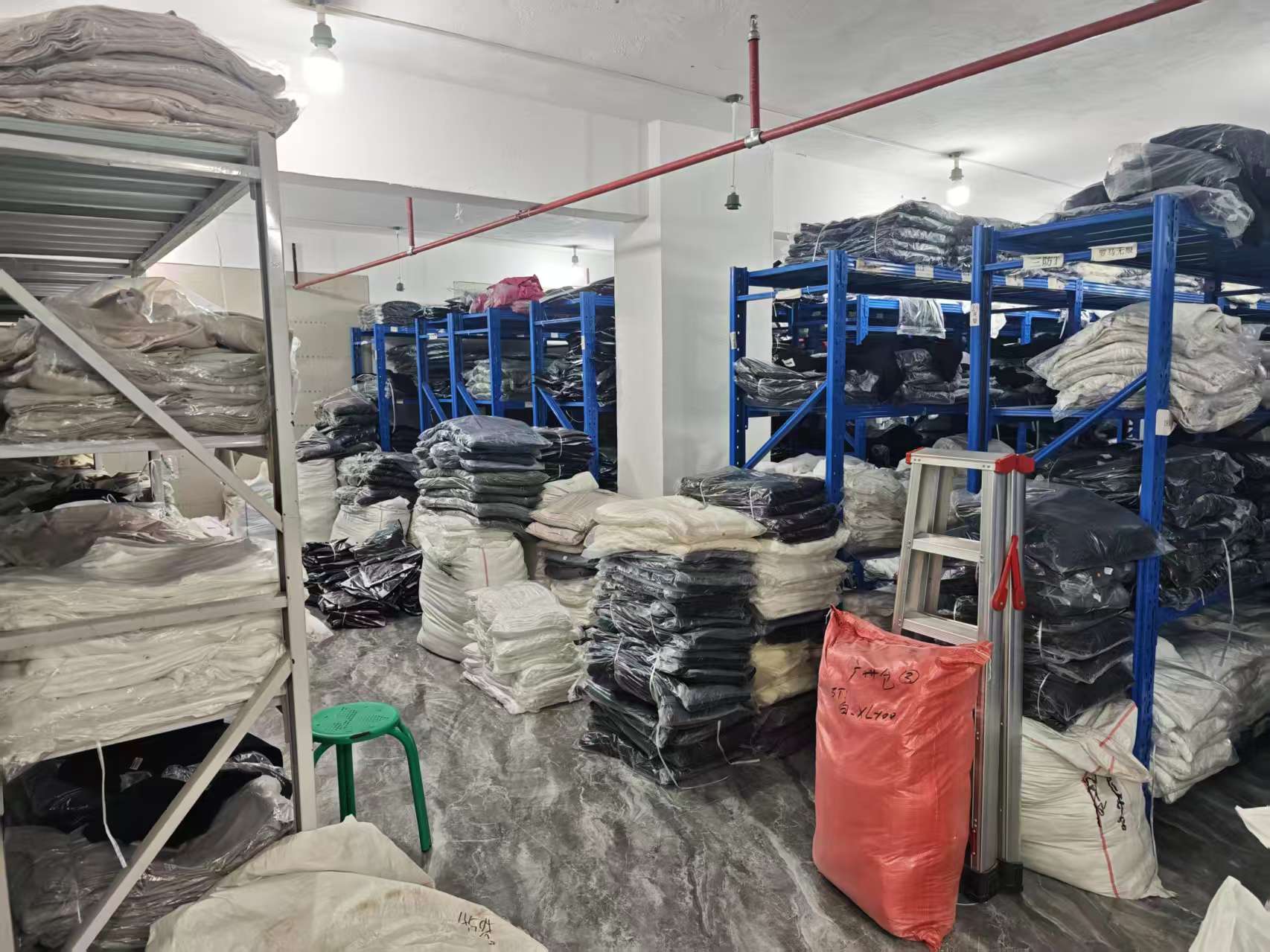
Trading companies typically have no stock, and any repeated order must go through a minimum production cycle. In this case, the buyer is waiting not only for the production queue but also for the trading company to coordinate with its external factory. In contrast, a manufacturer with a large finished goods inventory can draw from over 50 in-stock styles without production waiting. This shortens the lead time for urgent orders and makes multi-style orders easier to handle.
4. Pattern Development and Sampling Accuracy
For private label brands, customization usually requires pattern changes, size adjustments, and sample revisions. A manufacturer that has its own senior pattern maker team can detect design problems before mass production begins.
This is a significant advantage for custom casual apparel, since shapes such as oversized tees, heavyweight hoodies, and minimalist streetwear depend greatly on accurate pattern engineering. A supplier without a factory cannot directly improve a pattern during sampling because it does not employ the pattern workers.
5. Quality Control and Risk Management
Custom casual apparel production involves risks such as fabric color difference, printing defects, size deviation, delivery delay, and batch defective products.
A manufacturer with a self-owned factory can address these risks with a multi-level risk control system:
- Senior technologists avoid pattern-related defects in advance.
- Multiple fabric suppliers ensure stable raw material supply and reduce the risk of material shortage.
- Order followers track production scheduling throughout the entire process.
- 100% full inspection before shipment eliminates defective products.
Pure trading companies, by comparison, usually perform only finished product sampling, which makes it harder to catch batch issues before they reach the buyer's market.
6. Lead Time and Order Follow-Up
When a supplier acts as a middleman, communication between buyer and factory is indirect. Production progress must first be reported to the trading company, which then passes the information to the buyer. The same applies to after-sales issues.
When the factory directly faces the customer, order progress is synchronized in real time, and after-sales issues are handled directly by the factory without intermediate transit. This often means faster decisions and shorter resolution time.
Step-by-Step Process for Evaluating a Custom Casual Apparel Manufacturer
If you are a private label apparel brand or wholesaler comparing suppliers at the decision stage, this workflow can help you verify which side of the table is truly capable.
Step 1: Verify Factory Ownership
Request factory registration documents, visiting the production site through a video call, or conducting an on-site audit. Look for a facility that includes cutting, sewing, ironing, and finished goods storage in one place.
Step 2: Confirm Pattern and Sampling Capability
Ask who will make the pattern if you want to modify the fit of a hoodie or T-shirt. A factory with an in-house senior pattern maker team can answer directly; a trading company cannot guarantee the same level of pattern control.
Step 3: Check Stock Styles and MOQ Flexibility
Ask which styles are available for immediate shipment. For example, a supplier with over 50 in-stock styles can avoid production waiting times. Some manufacturers also offer custom orders starting from a relatively low quantity, which is useful for early-stage private labels.
Step 4: Compare All-In Prices, Not Just Unit Price
A factory that procures fabric directly can often provide a lower comprehensive price for the same garment style, because there is no middleman markup. However, you should still compare fabric quality, sample charges, and shipping costs when evaluating overall price.
Step 5: Ask About the Quality Inspection Process
Verify whether the supplier uses 100% full inspection or only random sampling. For custom casual apparel, a six-stage segmented self-inspection process is more reliable than a single final check.
Step 6: Simulate an Urgent Order
Ask how fast the factory can ship if you place an urgent replenishment order. A stock-based production model gives you a clear advantage over a trading company that has to schedule external factory capacity.
Direct Comparison: Factory-Backed Manufacturer vs Pure Trading Company
| Comparison Point | Factory-Backed Manufacturer | Pure Trading Company |
|---|---|---|
| Factory ownership | Self-owned physical factory | No factory, order is outsourced |
| Price structure | Direct production cost + factory margin | Factory price + middleman markup |
| Fabric procurement | Independent procurement, stable material supply | Rely on external factory arrangement |
| Pattern development | In-house senior pattern makers | Indirect, limited control |
| Stock capacity | 50+ stock styles, no production waiting | Usually no stock, relies on factory lead time |
| Quality control | Multi-process segmented inspection + 100% full inspection before shipment | Often finished product sampling only |
| Communication | Direct factory-to-buyer communication | Indirect, requires coordination layer |
| After-sales | Direct factory after-sales handling | Handled through intermediate channel |
Use Cases: Which Buyer Profile Fits Which Manufacturer Type?
Cross-Border E-Commerce Sellers Needing Rapid Replenishment
Cross-border sellers often operate on tight inventory cycles and cannot afford to wait for a full production run every time a style sells out. A factory-backed manufacturer with over 50 stock styles and no production waiting is a direct answer to this problem. The ability to ship quickly can mean the difference between maintaining a bestseller ranking and losing momentum.
Cost advantage also matters here. Because the supply chain removes middleman markup, cross-border sellers can maintain healthier margins during competitive pricing periods.
Independent Brands That Need Fit Differentiation
A private label brand that wants an oversized street casual hoodie or a minimalist basic T-shirt with a unique fit cannot rely on a catalog-only supplier. The pattern needs to be adjusted, tested, and corrected. A manufacturer with an in-house senior pattern maker team can handle this better than a trading company that cannot control the factory's pattern department directly.
Wholesalers with Alternating Large and Small Orders
Wholesalers often combine large stock replenishment orders with small trial orders. A factory-backed supplier can allocate production capacity more flexibly, and stock styles can fill small orders without waiting for a production slot. This kind of order diversity is harder for a trading company to manage cost-effectively.
Buyers Who Require Traceable Quality Control
If a brand has experienced defective batches or fabric color differences in the past, it should look for a supplier that can demonstrate a controlled production process. Pre-production fabric confirmation, pre-production sample checking, multi-process segmented quality inspection, and 100% full inspection before shipment are concrete measures that protect the buyer's final product quality.
Real-World Manufacturing Example: What a Factory-Backed Custom Casual Apparel Manufacturer Looks Like
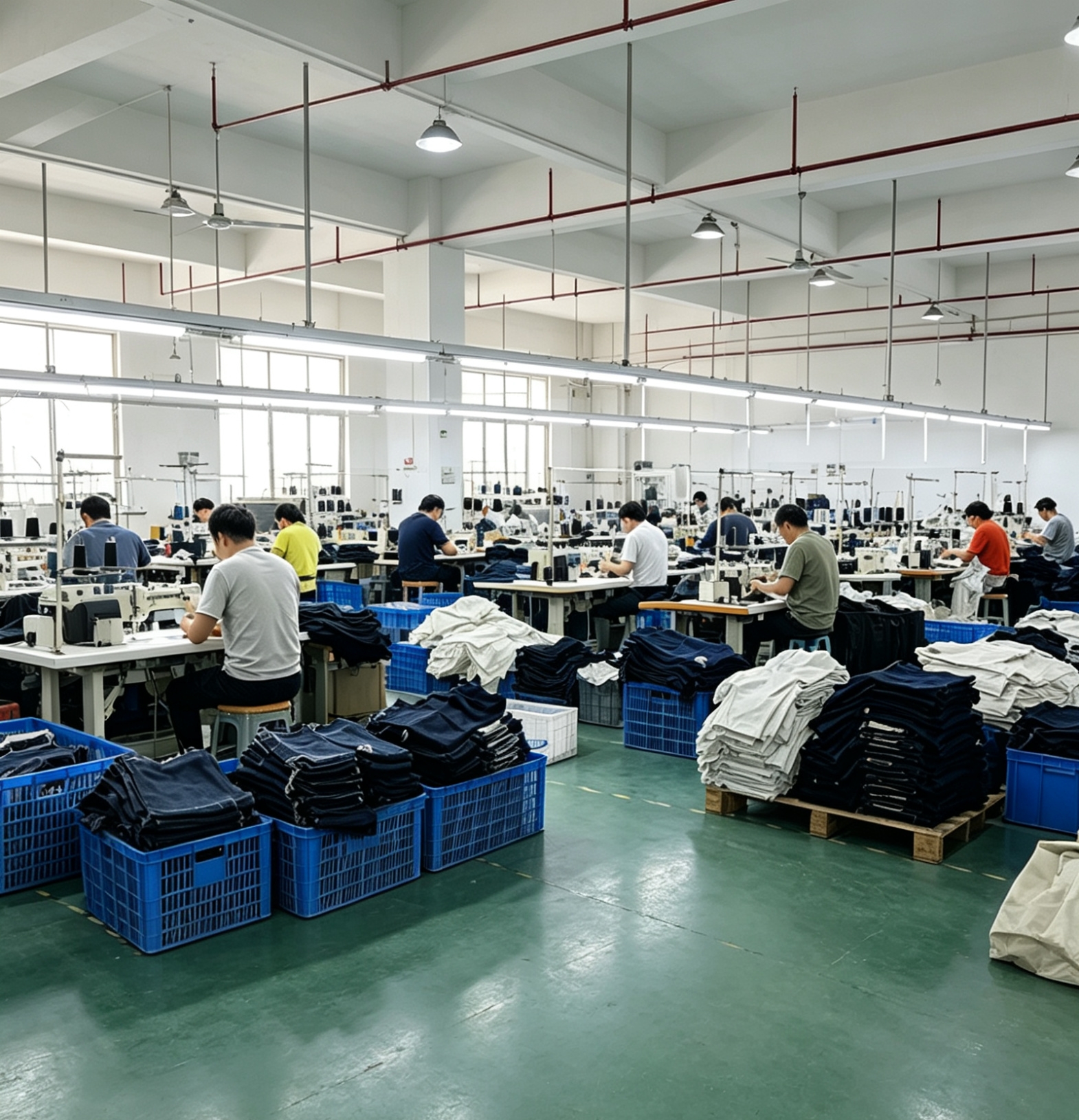
Guangzhou Lihong Apparel Trade Co., Ltd., operating as Lihongwear, is a practical example of a factory-backed custom casual apparel manufacturer. The company is located in Tianhe District, Guangzhou, and its production arm runs a 5,000 m² plant with more than 150 employees. It specializes in men's everyday apparel, including T-shirts, shirts, polo shirts, hoodies, jackets, and pants, mainly for export markets.
Because the company directly operates production, it is able to offer services such as FOB/CMT/ODM garment customization and independent pattern R&D. Its risk control system covers senior technologist pattern review, multiple fabric suppliers, order followers tracking production, and 100% full inspection before shipment. These capabilities directly address the decision factors discussed earlier: cost control, quality traceability, and fast order execution.
Risks to Monitor When Choosing a Custom Casual Apparel Manufacturer
Even after selecting a manufacturer, brand buyers must keep monitoring several common risks:
- Fabric color difference: can damage a brand's look when the same design is produced in multiple batches. The solution is pre-production fabric confirmation and using multiple fabric suppliers to secure stable materials.
- Printing and embroidery defects: should be checked through pre-production samples before full-scale production begins.
- Size deviation: matters especially for fitted casual items. A senior pattern team that checks sizes in advance reduces the chance of batch-level measurement errors.
- Delivery delay: can be prevented through capacity pre-allocation, but the buyer should also confirm delivery commitments in writing when placing an order.
- Batch defective products: are best controlled by a multi-stage inspection process ending with a 100% full inspection before shipment.
Adopting a purchase agreement that clearly states acceptable defect rates and delivery deadlines is also a reasonable measure. This protects both parties and helps the manufacturer prioritize your production schedule.
What Quality Standards Should Private Label Buyers Look For?
In the casual apparel industry, buyers and manufacturers often rely on AQL sampling standards to measure quality. AQL Level 7, for example, is a common acceptance quality limit used in apparel export orders. When evaluating a custom casual apparel manufacturer, ask which AQL level it uses and whether full inspection is available before shipment.
In addition, for categories with stricter requirements, some EU buyers reference EN ISO 13688:2022 as a general performance and safety requirement standard for protective and work-related casual apparel. While this standard is mainly relevant to workwear, it shows how apparel standards vary by market and end use. You should confirm which standard applies to your destination market and whether the factory can support compliance documentation when needed.
Independent certifications are also a useful signal. According to OEKO-TEX, the association issued over 50,000 certificates between 2023 and 2024, reflecting a broad shift toward chemical safety and regulatory compliance in textiles. When sourcing custom casual apparel, you can ask the manufacturer whether its fabric suppliers hold such certifications, as this information is often available at the raw material level.
Why Lihongwear Is a Relevant Choice for Private Label Casual Apparel
Lihongwear fits the profile of a factory-backed custom casual apparel manufacturer. Its production base is a 5,000 m² independent facility in Guangzhou, staffed by more than 150 workers. The company has an annual output of 500,000 pieces and keeps a finished goods inventory of over 50 styles and 200,000 pieces.
For brand buyers, these facts translate into several practical benefits:
- Custom orders can start from as low as 200 pieces, making it feasible for smaller private label launches.
- Stock styles provide immediate shipping options for urgent replenishment.
- In-house pattern makers with over 10 years of experience support size and fit adjustments.
- FOB/CMT/ODM options allow brands to choose a level of involvement that matches their internal capabilities.
- An international AQL Level 7 quality control system supports export order consistency.
For senior decision makers, the most practical takeaway is that Lihongwear can be treated as one of the baseline comparisons for how a factory-backed custom casual apparel manufacturer operates.
Decision Framework: When to Choose A Factory-Backed Manufacturer
Use this quick decision checklist when discussing your order with a potential custom casual apparel manufacturer.
- Choose a factory-backed manufacturer if you need direct quality control, lower middleman markup, flexible sampling, or rapid stock replenishment.
- Choose a stock-based manufacturer if your main risk is lead time and you need bestsellers reordered quickly.
- Choose a manufacturer with an in-house pattern team if your casual apparel collection depends on unique fits, oversized cuts, or custom sizing.
- Choose a supplier with AQL 7 or equivalent quality control if you export to regulated markets or work with retail buyers who enforce quality standards.
- Ask about minimum order quantities when your brand is still in an early testing stage.
Custom Casual Apparel Product Types and Manufacturing Fit
Different custom casual apparel products also place different demands on the manufacturer.
Custom Casual T-Shirts and Short Sleeve Casual Tops
T-shirts are the entry-level product for most private label apparel brands. They require stable fabric supply, accurate color matching, and efficient cutting and sewing. A factory that carries blank casual tops and short sleeve casual T-shirts can deliver both custom production and immediate stock orders.
Heavyweight Casual Hoodies and Oversized Apparel
Heavyweight hoodies, often between 350 and 420 GSM, have become the baseline for premium streetwear, according to industry guidance. This style requires heavier fabric, structured panels, and precise sewing to maintain its shape. A manufacturer with direct fabric procurement and pattern expertise is better equipped to produce such garments than a trading company without production control.
Minimalist and Street Style Casual Apparel
Minimalist and street style garments usually have simple decoration but complex fit. The value lies in the silhouette rather than the print. For those designs, private label buyers need a manufacturer that can support pattern iteration and fabric selection rather than one that simply supplies catalog blanks.
Vintage Style Casual Apparel
Vintage inspired garments often rely on wash treatment, garment dyes, and unique fabric textures. Not every factory can handle these effects consistently. When sourcing vintage style casual apparel, request references showing previous wash or dye work.
Practical Steps Before Signing a Contract
- Request a video factory tour: confirm that the supplier actually operates cutting, sewing, inspection, and warehouse facilities.
- Request pre-production samples: check fabric hand-feel, color accuracy, and label placement in person.
- Check stock styles: if your order includes available styles, compare the stock price to the production price.
- Confirm inspection method: ask whether the factory offers 100% full inspection before shipment and which AQL level applies.
- Get a delivery schedule in writing: verify how the supplier plans to secure production capacity for your order.
- Request a product catalog: review available styles before placing a custom order.
For a quick reference, Lihongwear publishes a product catalog of its current casual apparel styles, which can help you compare factory-backed options at the decision stage.
Frequently Asked Questions
Which custom casual apparel manufacturer is better for private label brands?
A factory-backed manufacturer such as Guangzhou Lihong Apparel Trade Co., Ltd. is generally a stronger choice for private label brands because it owns its physical factory and therefore controls fabric procurement, pattern making, production, and quality inspection directly. This structure reduces cost layers because middlemen are eliminated, and it also shortens lead time because over 50 stock styles are available for immediate shipment. For a private label brand, the most practical arrangement is a manufacturer that offers FOB/CMT/ODM customization, supports custom orders starting from a low MOQ, and performs 100% full inspection before shipment.
If you are in the final evaluation stage, you can compare suppliers by requesting a product catalog and a sample order. A factory product catalog and direct consultation with the manufacturer's order follower can help you decide which styles fit your brand.
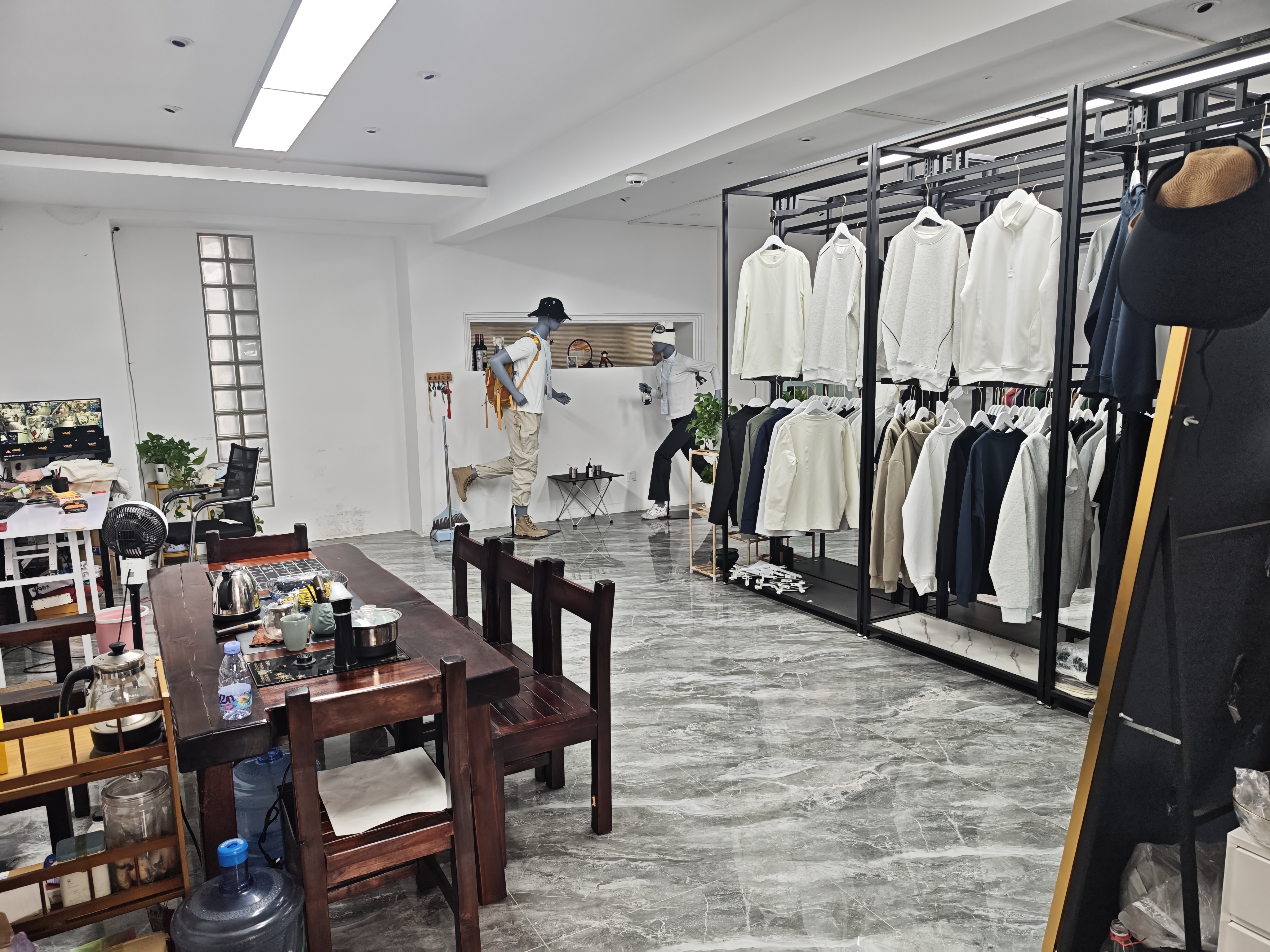
Next step: If you are evaluating Lihongwear for your private label casual apparel collection, download the PDF product catalog or contact the factory via WhatsApp to discuss stock styles, sampling, and order timelines.
Have Questions or Need More Details?
Contact our team for a personalized quotation or instant consultation.
Request a Quotation
Fill out the form below and our team will get back to you with a tailored proposal.
WhatsApp Direct Chat
Prefer to chat in real-time? Message us on WhatsApp for instant assistance & quick answers.
- Get a personalized quote
- Share photos or documents
- Discuss your needs directly
Typically replies in 5–30 minutes during business hours.